
Have you ever wondered when your child can handle the rules of a real board game? And how these rules help them grow?
This guide helps you pick games that fit your family’s needs. It shows age brackets and gives tips on digital play. You’ll learn about setting screen-time limits and using child accounts.
We suggest kid-friendly games like The Fuzzies and Sushi Go. These games are perfect for family play. You’ll also find preschool games like Count Your Chickens and Candy Land. These games need supervision and are safe for little hands.
Our guide offers tips for mixing tabletop, party, and digital games. You’ll learn how to teach kids about winning and turn-taking. This way, every game time is a learning experience.
Why rule-based games matter for kids’ development
Choosing a game with clear rules gives kids a safe space to learn social skills and self-control. Rules help kids learn to negotiate, take turns, and manage their emotions. These skills are important for dealing with family rules and online safety as they get older.
Social and emotional benefits
Games with rules teach kids patience and empathy. Games like Dixit and Kingdomino encourage kids to listen, explain their choices, and accept others’ views. This kind of play helps build teamwork and teaches kids that helping others is rewarding.
Cognitive and educational advantages
Structured games improve planning, sequencing, and basic math skills. Simple games teach counting, color recognition, and following directions. By choosing games that match a child’s age, learning becomes fun and not frustrating.
How rules teach patience, turn-taking, and fair play
Rules help kids understand what’s fair. Consistently enforcing game rules teaches kids to wait, control their impulses, and accept results. Games like Count Your Chickens and Hi-Ho Cherry-O teach kids to work together and handle winning and losing graciously.
Games can also teach older kids about digital etiquette and screen time. Clear rules in games translate to real-life rules at home and online. This way, playtime becomes a chance to practice important life skills.
Games with rules for kids by age
You want games that fit how children think and move. Use age brackets to match complexity and controls: under 5 for guided play, 5–9 for clearer structure and basic digital safeguards, 10–12 for supervised social play, and 13–16 for negotiated freedoms. Choosing age-appropriate play helps you pick games for kids with instructions they can follow without frustration.
Choosing games that match developmental stages
Match required skills to the child. Look at counting, reading, fine motor control, and strategy demands. For under 5, choose short, education-focused titles with simple turns and visual cues. For ages 5–9, introduce more structure and basic scoring. At 10–12, kids can handle longer sessions and light strategy. Teens can manage complex rules and online interaction when you set guardrails.
Use visual reminders, reduced hand-sized components, and extra time to bridge gaps. When you need examples, consult a practical guide like games-with-rules resources for lists organized by age and style.
Adapting rules for mixed-age groups
In mixed groups, simplify scoring and team younger players with older ones. Cooperative games cut down on losing feelings and let younger kids contribute. Try pairing a preschooler with a school-age sibling and let the older child handle scoring or rules prompts.
Scaffold complexity by adding a rule or two each round. Use cooperative modes from publishers such as Peaceable Kingdom to keep play inclusive. This approach helps you create fair play without changing the game’s spirit.
Balancing challenge and accessibility for engagement
Set game length to attention spans. Short rounds suit preschoolers, medium sessions work for 6–9 year olds, and longer strategy games fit tweens. Offer optional advanced rules for older or quicker players while keeping a basic version for others.
- Skill match: Check counting, reading, and dexterity needs before you play.
- Component safety: Ensure pieces are large enough for toddlers.
- Rule aids: Use cards, pictures, or timers to help memory and pacing.
| Age Bracket | Recommended Complexity | Play Length |
|---|---|---|
| Under 5 | Simple turns, cooperative play, visual prompts | 10–20 minutes |
| 5–9 | Clear structure, basic scoring, short strategy | 20–40 minutes |
| 10–12 | Longer rules, social negotiation, managed online play | 30–60 minutes |
| 13–16 | Complex strategy, freedom with supervision, account controls | 45–90 minutes |
When you plan, aim for a mix of games for different age groups so everyone stays involved. Offer a few fun games for kids by age and keep rule tweaks on hand. Over time, kids develop moral reasoning about fairness and cheating as they play, which makes games with rules by age valuable for growth.
Explore the Best Games With Rules by Age and Setting
If you want more specific game ideas, these related guides can help you choose the right rule-based games for your child’s age, skill level, and play setting.
- Best First Games With Rules for Kids Ages 3 to 5
- Best Strategy and Social Games for Kids Ages 6 to 9
- Best Complex Strategy Games for Kids Ages 10 and Up
- Best Family Game Night Games With Rules: A Complete Parent Guide
- Best Games With Rules for Classroom, Daycare, and Homeschool
- Best Games With Rules for Birthday Parties and Rainy Days
Games with rules for preschoolers
You want games that teach listening, taking turns, and strategy. Preschool play is all about short games, clear steps, and adult help. The list below has games for ages 3–5 that are easy to learn and fun.
Top cooperative and simple competitive games for ages 3–5
Choose games that focus on teamwork and small wins. Cooperative games help kids share goals, while simple competitive games teach fair play. Look for games with bright colors and simple rules to keep kids interested.
Examples and short rule summaries
Count Your Chickens (cooperative, age 3+): Work together to gather escaped chicks back to the coop by moving pieces along a path. This game builds counting skills and teamwork through shared goals.
Candy Land (age 3+): Players draw color cards and move to the next matching square on the path. Use this game to teach colors, taking turns, and simple cause-and-effect.
Hi-Ho Cherry-O (age 3+): Spin, count, and pick cherries into your bucket; first full bucket wins. It practices counting and fine motor control; remove small pieces when toddlers are present.
Hoot Owl Hoot (ages 4–8): A cooperative color-matching game where players guide owls back to the nest before sunrise. The game offers two difficulty levels so you can scale challenge for your group.
Tips for adults: simplify rules, supervise, and limit screen time
Simplify optional steps and model one round before children play. Short demonstrations reduce confusion and temper early disputes. Supervise closely to help with rule enforcement and to keep play calm.
Keep screen-based alternatives limited. Preschoolers benefit more from tactile play and face-to-face interaction. For outdoor variations and movement-focused ideas that pair well with these tabletop picks, see this handy guide to active preschool games for more inspiration.
When setting up, check pieces for choking hazards and adapt play space for safety. If you host playdates, pick a couple of playdate games with rules and rotate activities so every child gets a chance to lead. For rainy days, indoor games with rules for kids that emphasize simple movement or matching keep energy steady and learning continuous.
Games with rules for 3 year olds

Play should teach rules in a way that’s easy for toddlers. Keep instructions short and simple. Repeat the same phrase each turn and show one step at a time.
Use cooperative choices and color or counting goals. This way, children enjoy success while learning. It also helps with basic turn-taking.
Best picks are simple, age-rated games like Count Your Chickens, Candy Land, and Hi-Ho Cherry-O. Each game has clear actions. For example, move to a color, count tokens, or place a piece on a coop.
These games let you model children’s games rules in real moments. They also limit frustration.
Teach rule-following by demonstrating a full turn, then inviting a child to copy you. Use visual cues like cards or a spinner. Offer praise for tries.
Keep each round short and restate rules before play. When a rule is hard, break it into two tiny steps instead of long explanations.
Introduce tiny dexterity tasks only when the rule stays minimal. For example, pick-and-pass for one token, or stack one block while counting aloud. These short tasks add fine-motor work without complex rules getting in the way.
Safety matters. Check manufacturer age ratings and remove small tokens for under-3s. Choose soft, washable pieces and inspect toys for splinters or loose parts.
Keep a low, stable play area and supervise closely. This maintains safety in kid-friendly games.
Set up a simple routine: one short game, a small snack, then another activity. Photograph builds and wins to celebrate progress and reinforce following rules. For creative block play ideas that pair well with simple rule-based games, see this practical guide on block-building activities.
| Game | Core rule | Why it works for 3s |
|---|---|---|
| Count Your Chickens | Cooperate to move all pieces home | Simple turns, shared goal, counting practice |
| Candy Land | Move to the color drawn | No reading required, color recognition and patience |
| Hi‑Ho Cherry‑O | Pick and count cherries into a bucket | Fine motor work, early counting, quick rounds |
Keep rules consistent, watch for frustration, and remove unsafe pieces. When you balance play, learning, and safety, games with rules for 3 year olds become reliable tools for growth.
Games with rules for 4 year olds
At age four, your child is ready for short, guided play. This play helps with counting, color recognition, and simple decision-making. Choose games that are easy to follow, use big, safe pieces, and have clear signs.
Hoot Owl Hoot is a great example of a cooperative game. It mixes color matching with team goals. You can start with simple colors and counting, then add more rules as your child gets better.
To teach new rules, start with one change at a time. First, explain the rule, then show it in play. Let your child try it while you guide them. Use games with pictures or simple instructions you can repeat together.
Practical steps help a lot. Make turns shorter to keep focus, avoid scoring, and use small pieces for little hands. Praise sharing and making choices to encourage following rules without stress.
When introducing competition, start small. Try team play where kids work together for a win. Cooperative games teach teamwork before moving to individual wins and losses.
Choose games that focus on effort, not just winning. This makes play fun and helps your child learn counting, colors, and matching skills in a guided way.
Games with rules for 5 year olds
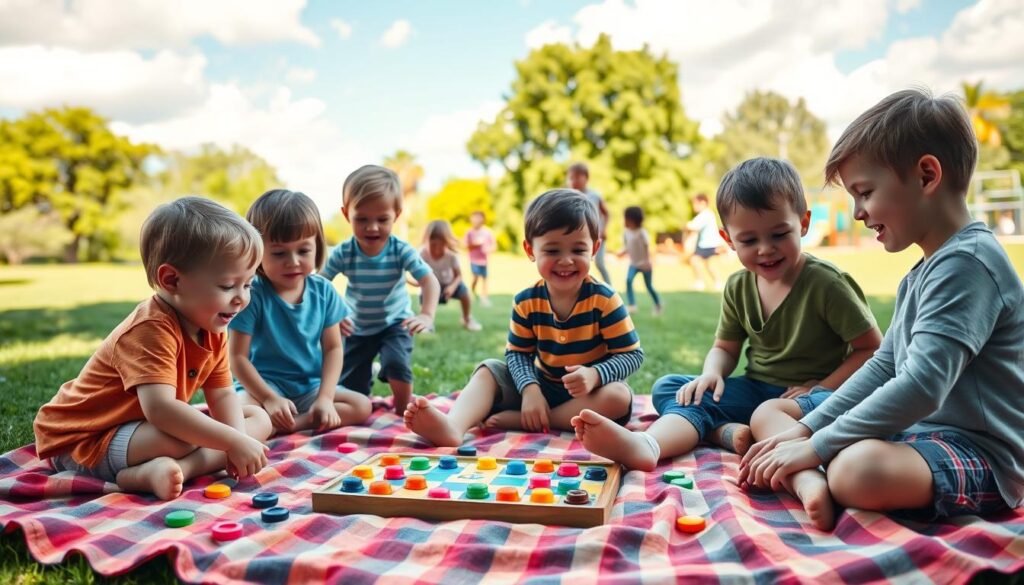
At five, kids can handle more structure and simple strategies. Introduce fast card games and simple scoring. Keep playtime short and clear to keep your child engaged and learning.
Fast-paced card and pick-and-pass games
Sushi Go is great for kids starting with pick-and-pass games. It moves quickly and has fun artwork. Even kids who can’t read yet can make good choices.
Other pick-and-pass games work the same way. Kids pick a card, pass it, and then pick again. This helps them focus and learn to wait their turn.
Strategies for introducing scoring and basic strategy
Use visual aids to teach scoring. Use score sheets, stickers, or tokens to track points. Explain which sets earn points and practice one example each round.
Teach a simple strategy like “collect two of a kind.” This shows kids how their choices affect the score.
Managing attention span and turn-taking
Keep games short, about 15–25 minutes. This keeps energy high and prevents boredom. Use a timer or signal to speed up turns and reward waiting.
Praise kids for being patient and have a clear rule for skipped turns if they get distracted.
Here’s a quick guide to help pick games that fit your goals and time.
| Game | Age Range | Playtime | Skills Practiced |
|---|---|---|---|
| Sushi Go | 5+ years | 15–20 minutes | set collection, quick choices, visual scoring |
| Simple matching pick-and-pass | 4–6 years | 10–15 minutes | turn-taking, pattern recognition, sharing |
| Card games with tokens | 5–9 years | 15–25 minutes | counting, basic scoring, decision-making |
| Cooperative short rounds | 5+ years | 10–20 minutes | teamwork, following instructions, patience |
When teaching, read the rules aloud and show a practice round. Use games with instructions to teach. Break steps into three or fewer actions to keep learning fun.
Games with rules for 6 year olds
Six-year-olds can follow longer sequences and enjoy small challenges. Rule-play teaches patience, turn-taking, and fair play basics. Keep sessions short, clear, and fun to keep kids engaged and learn through repetition and praise.
Fine-motor and dexterity picks
Choose games that reward steady hands and calm focus. Jenga for kids trains precision and patience. The Fuzzies offers a softer version with fuzzy pieces that stick, making resets quick and fun.
These games improve fine motor control and teach social rules about turns and gentle handling. Make sure play areas are clear and use soft surfaces for dropped pieces.
Introducing light strategy and reinforcing rules
At six, you can introduce light strategy games that ask kids to plan one or two moves ahead. Repeated play strengthens rules retention and prevents confusion. Start with simple scoring or a single decision point, then add a small rule once the group masters the basics.
Practice by playing the same game across several short sessions. This helps your child internalize steps without feeling overwhelmed. Use low stakes and celebrate small successes to keep motivation high.
Encouraging patience and gracious losing
Model calm reactions when a piece falls or a plan fails. Teach phrases like “good try” and “next time” to normalize mistakes. Offer cooperative options where players work toward a shared goal, so losing feels less personal.
Limit sessions to 15–30 minutes to keep attention strong. Use praise, brief rule reminders, and role-switching so each child gets practice leading and following.
| Game | Skills Targeted | Ideal Session |
|---|---|---|
| Jenga for kids | Fine motor control, patience, turn-taking | 15–20 minutes |
| The Fuzzies | Dexterity, social play, quick resets | 10–15 minutes |
| Simple light-strategy card game | Planning, rules retention in children, scoring basics | 20–30 minutes |
| Cooperative stacking or balancing | Teamwork, patience, encouragement | 15–25 minutes |
For gross motor complements and varied play ideas, see this guide on physical play to boost skills at physical play ideas for kids. Combining tabletop dexterity games for kids with active breaks helps maintain focus and supports overall development.
Games with rules for 7 to 9 year olds and strategy games for kids ages 6–9
As your child grows, they move from simple games to ones that require planning. At ages 7–9, they can make deeper choices while keeping games fun. Choose games that reward quick thinking and basic planning to keep them engaged and confident.
Transitioning to family-style and entry-level strategy games
Kingdomino and Karuba are great for this transition. Kingdomino teaches spatial matching in 15–20 minutes. Karuba guides explorers across a board in 30–40 minutes. Both are perfect for kids aged 7 to 9 with adult guidance.
How to teach rules that involve planning and sequencing
Break down complex rules into simple steps. Show one example turn and then practice together. Explain how choices affect future moves.
Recommended playtime lengths and group sizes
Play sessions should last 15 to 40 minutes. Kingdomino fits in 15–20 minutes. Longer games may take 30–40 minutes. Play with 2–4 players for best focus. For mixed ages, team up or simplify scoring.
Set digital limits and prioritize tabletop games. Family games mix strategy with social learning. This helps kids grow from following rules to making smart choices while staying fun.
Games with rules for tweens and older kids
You’re looking for games that help tweens grow their social skills and curiosity. For kids aged 10–16, choose games that encourage teamwork, planning, and discussion. These games help build friendships and teach kids to follow rules while exploring new freedoms.
Start with games that everyone can play together. Exit The Game and Charterstone are great for sleepovers and long-term fun. Exit The Game has puzzles that you solve together. Charterstone introduces new rules over time, helping you build strategy and commitment.
Balance time playing games with online activities. Use child accounts and check ratings to ensure safety. Teach teens to be careful online and to report any problems. Explain why rules are important and set clear limits.
Give more freedom gradually. Set simple goals based on responsibility and respect. For 10–12 year olds, focus on communication and online safety. Teens aged 13–16 can handle more freedom if they meet their goals.
Choose games that match your child’s age and interests. For 10 year olds, try cooperative escape-room boxes and simple legacy games. Older teens enjoy social deduction and strategy games. Make sure playtime is predictable and talk about good habits afterwards.
Social and cooperative play picks
- Exit The Game — cooperative escape puzzles for shared problem solving.
- Charterstone — legacy campaign that rewards planning and memory.
- Chameleon — social deduction for older teens and fast group rounds.
Managing online interactions and rules
- Use child accounts to control purchases and chat.
- Review game ratings before you allow play.
- Discuss privacy, friend lists, and what to share.
Negotiating more freedom
- Set clear benchmarks tied to privileges.
- Allow trial periods and adjust based on behavior.
- Hold regular check-ins to revisit rules.
| Game | Recommended Age | Play Style | Session Length |
|---|---|---|---|
| Exit The Game: The House of Riddles | 10+ | Cooperative escape puzzles | 60–120 minutes |
| Charterstone | 10+ | Legacy strategy campaign | 60–90 minutes |
| Chameleon | 14+ | Social deduction party game | 15 minutes |
For long-term skills, mix digital games with hands-on activities. Use resources on game development and age progressions to plan activities. See a guide on developmental stages at building games for children. This mix keeps learning interesting and supports growth in following rules and thinking strategically.
Best settings and contexts: family night, classroom, birthday parties, playdates, and indoor rainy-day play
Choose games that match the group’s size, ages, and energy. For a smooth family evening, pick games that let younger players join without slowing older ones. In classrooms, tie activities to lessons so play reinforces skills. At parties and playdates, keep rules simple and flexible so kids stay engaged. When the weather traps you inside, use compact, rule-based options to channel energy and curiosity.
Family game night works best with multi-age friendly picks. Dixit supports storytelling and creative thinking for mixed ages. Uno lets young players learn turn-taking while older family members enjoy strategy. Ticket to Ride suits longer sessions and teaches planning. Rotate games to keep your family game night with kids fresh and fair for everyone.
Classroom games with rules should map to learning goals. Use Hi-Ho Cherry-O to practice counting. Hoot Owl Hoot teaches colors and teamwork. Cooperative board activities encourage social skills and help you manage transitions between lessons. When devices are involved, follow age-based account rules and supervise closely.
Birthday party games with rules benefit from easy adaptations for large groups. Chameleon is great for older kids who like social deduction. Relay games and Charades work for energetic crowds. Shorten rounds, split into teams, and set clear boundaries to keep play organized.
Playdate games with rules should ease sharing and reduce disputes. Cooperative puzzles, simple card games, and team challenges help guests bond quickly. Offer step-by-step rule cards or quick demos so every child can join the fun without long explanations.
Rainy day games with rules offer low-tech solutions that hold attention. Escape-room boxes and cooperative puzzles provide goal-driven play for older kids. Legacy-style or progressive puzzles give families a multi-session project. Prioritize screen-free games with rules to keep focus high and hands busy.
| Setting | Good Picks | Why it Works | Quick Adaptation Tips |
|---|---|---|---|
| Family Night | Dixit, Uno, Ticket to Ride, Sushi Go | Supports mixed ages, balances creativity and strategy | Shorten rounds, form teams, use house rules for younger players |
| Classroom/Daycare | Hi-Ho Cherry-O, Hoot Owl Hoot, cooperative board games | Aligns with lessons, promotes turn-taking and group goals | Link to curriculum, use timers, rotate roles |
| Birthday Parties | Chameleon, Charades, relay games, Twister | High energy, social interaction, easy to scale | Split into teams, limit round time, assign moderators |
| Playdates | Cooperative puzzles, card games, simple team challenges | Encourages sharing, quick to learn | Provide demo rounds, keep rule cards handy |
| Rainy-Day Indoor | Exit: The Game, cooperative puzzles, legacy-style projects | Longer focus, problem solving, minimal screen use | Break sessions up, set milestones, mix active and quiet tasks |
Conclusion
As kids grow, you need to change rules and screen time to fit their age. For little ones, pick games that teach and need a grown-up nearby. For older kids, try games like Sushi Go and Dixit that help with strategy and family fun.
These games help kids learn counting, colors, and how to plan. You can also mix games for different ages. Make scoring easier for the young or add harder challenges for the older ones.
Playing classic board games teaches kids patience and how to lose well. Use games for playdates and when it’s raining outside. These games also help kids learn to share and take turns.
Make a plan for your home that includes games without screens. Start talks about online safety as your kids get older. Choose games that teach the skills you want them to learn. This way, games become a great way to learn and bond together.