
Can a simple stack of blocks change how a child sees the world? When children build towers, bridges, houses, roads, forts, or tiny cities, they are doing much more than playing with objects. They are testing ideas, solving problems, using their hands, organizing space, and learning how the physical world works.
Building games for children are powerful because they connect imagination with real action. A child can think about a tower, try to build it, watch it fall, change the design, and try again. That simple cycle teaches planning, patience, problem-solving, and confidence in a way that feels natural.
This article explains what science and child development research suggest about building games, construction play, block play, and hands-on learning. You will also find practical ideas, age-based tips, toy suggestions, and simple ways to support your child without taking over the play.
Key Takeaways
Building games support early cognitive, social, emotional, and motor development.
Simple stacking and construction activities help children practice spatial reasoning, planning, balance, and cause and effect.
Block play, magnetic tiles, cardboard projects, and recycled material building activities can support early STEM learning.
When children build, fail, rebuild, and improve, they develop patience, perseverance, and confidence.
The best building games are open-ended, safe, age-appropriate, and easy for children to explore in their own way.
Start Here: Explore Building Games by Skill and Activity
This guide is organized around the main ways building games can support child development. Use the sections below to explore how construction play connects with thinking, problem-solving, STEM learning, patience, confidence, and age-based growth.
In this guide, you will find:
- Building Games and Brain Development
- Building Games, Intelligence, and Problem-Solving
- Building Games and Math / STEM Skills
- Building Games, Focus, Patience, and Perseverance
- Building Games and Confidence / Emotional Growth
- Building Games by Age and Development Stage
- Practical Building Activities, Toy Guides, and Parent Tips
If you are looking for step-by-step activity ideas, visit our complete guide: Building Games for Kids: The Complete Guide to Construction Play, Learning, and Development.
The Science Behind Building Games for Children
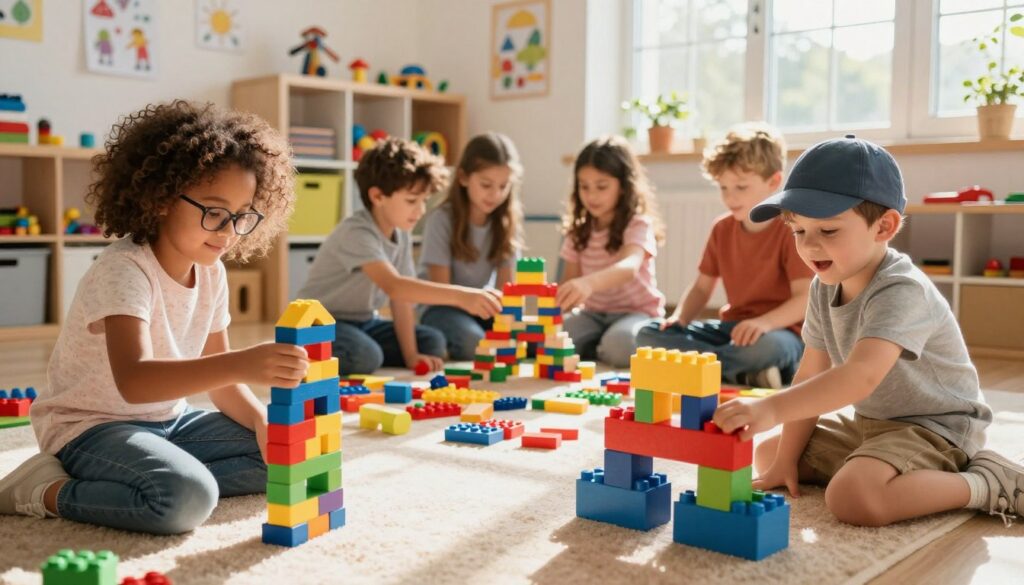
When children build, they are not only moving pieces around. They are thinking with their hands. They observe, predict, test, compare, and correct their ideas in real time.
For example, when a child builds a tower, they may ask themselves without saying it out loud:
Will this block stay here?
Is this piece too small?
Why did the tower fall?
What can I change next time?
That is the beginning of scientific thinking. A fallen tower is not just a mistake. It is information. It teaches children about weight, balance, stability, height, shape, and support.
Building games also encourage children to slow down and focus. They must pay attention to how pieces fit together, how structures stand, and how small changes affect the whole project. This kind of hands-on learning helps children understand abstract ideas through real objects they can touch and move.
Building games can support:
- spatial reasoning
- early problem-solving
- hand-eye coordination
- planning and sequencing
- patience and persistence
- teamwork and communication
- creativity and flexible thinking
A child who builds regularly is not simply making towers. They are practicing how to think, test, adjust, and try again.
Building Games and Brain Development
Building games support brain development because they activate several skills at the same time. A child has to see the object, hold it, rotate it, compare it, place it, and imagine what might happen next.
This combination of visual thinking, hand movement, planning, and prediction is very valuable for young children. It helps them connect what they see with what they do.
When a child stacks blocks, connects bricks, or designs a small structure, they are practicing mental skills such as:
- visual memory
- attention
- comparison
- prediction
- sequencing
- flexible thinking
- cause and effect
Building games are especially powerful because they are active. Children are not only listening or watching. They are doing. They receive instant feedback from the materials. If a bridge collapses, they see the result immediately. If a wider base works better, they discover that through experience.
This is why construction play is often linked with early learning. It gives children a safe, playful space to explore how the world works.
A useful parent question is:
“What do you think will happen if you put this piece here?”
This simple question invites the child to predict, think, and explain. It turns play into deeper learning without making it feel like a lesson.
Building Games, Intelligence, and Problem-Solving
Building games help children practice the kind of thinking they will use later in school and daily life. Every building activity includes a problem to solve.
A child may wonder:
How can I make this tower taller?
How can I stop this wall from falling?
How can I make a roof?
How can I connect these two parts?
How can I build something that looks like my idea?
These questions develop logic and problem-solving. Children learn that one solution may not work, but another might. They also learn that mistakes are part of the process.
Logic and Critical Thinking
When a structure falls, children naturally begin to compare choices. They may notice that a narrow base is weaker than a wide base, or that heavy blocks need stronger support.
This builds critical thinking because the child has to connect action with result.
Instead of saying, “That did not work,” try asking:
“What could we change to make it stronger?”
This encourages your child to think like a problem solver.
Spatial Awareness
Spatial awareness is the ability to understand where objects are in space and how they relate to one another. Building games are excellent for this.
Children practice spatial thinking when they:
- stack blocks
- fit shapes into spaces
- build roads
- create houses
- connect bricks
- design bridges
- compare tall and short structures
- build inside, under, over, or beside another object
These words and concepts are important for later math, reading maps, understanding diagrams, and even early engineering.
Fine and Gross Motor Skills
Building games also support motor development. Small pieces strengthen fine motor skills and hand-eye coordination. Larger materials, such as pillows, boxes, and big blocks, support gross motor skills because children lift, carry, crawl, stretch, and balance.
For toddlers, large blocks and soft materials are best. For older children, smaller pieces can help develop precision and control.
Building Games and Math / STEM Skills
Building games are one of the easiest ways to introduce early STEM learning at home, in preschool, in daycare, or in the classroom.
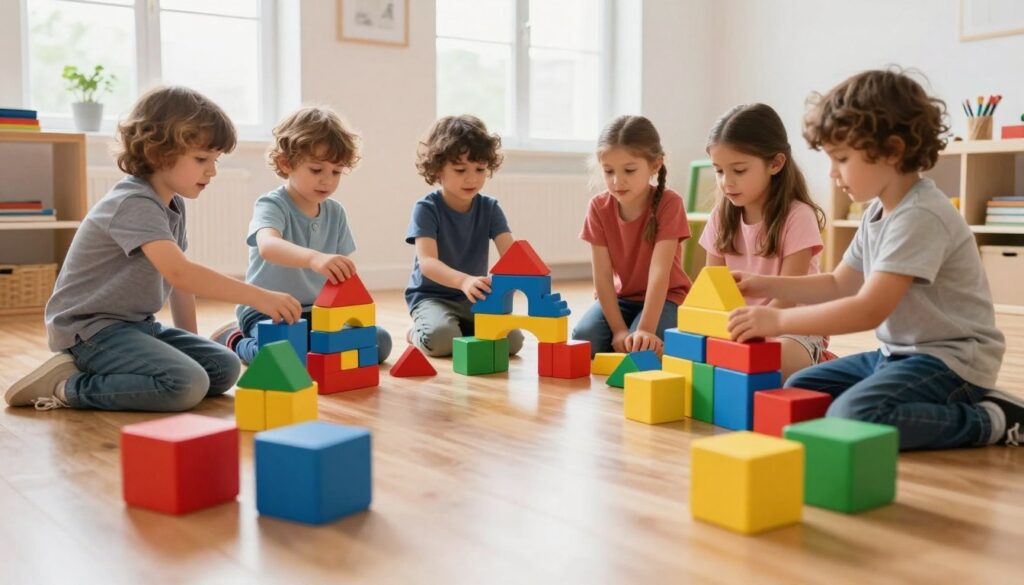
STEM means science, technology, engineering, and math. Children do not need worksheets to begin exploring these ideas. They can start with blocks, cups, cardboard, sticks, stones, magnetic tiles, and recycled materials.
Building games support math and STEM skills because children naturally explore:
- shapes
- patterns
- size
- height
- length
- symmetry
- balance
- measurement
- counting
- sorting
- stability
- cause and effect
A child building a bridge is already exploring engineering. A child sorting blocks by color or size is practicing early math. A child building a ramp and rolling a toy car down it is exploring physics.
Simple STEM building challenges include:
- Build the tallest tower you can.
- Build a bridge that can hold a toy car.
- Build a house for a stuffed animal.
- Build a boat that floats.
- Build a ramp and test different slopes.
- Build a wall that does not fall.
- Build a shape using only sticks or straws.
The goal is not perfection. The goal is exploration. Children learn when they try, observe, adjust, and try again.
Building Games, Focus, Patience, and Perseverance
One of the most important benefits of building games is that they teach children to keep trying.
Building takes time. Pieces fall. Towers lean. Bridges collapse. Designs do not always work the first time. For children, this can be frustrating, but it is also valuable.
Building games give children safe practice with patience and perseverance. They learn that failure does not mean the game is over. It means they can try a new idea.
This is especially helpful for children who give up quickly or become frustrated when something does not work.
You can support patience by saying:
“You worked hard on that.”
“You tried a new idea.”
“That tower fell, but now you know something new.”
“What do you want to try next?”
Avoid rushing in to fix the problem too quickly. If the child is safe, wait a few seconds. Give them time to think. That pause can help them develop independence.
Building games also support focus because children become absorbed in the task. They pay attention to details, compare pieces, and stay involved long enough to complete a goal.
For many children, construction play is a natural way to build concentration without pressure.
Building Games and Confidence / Emotional Growth
Building games can be powerful for emotional development because they give children visible proof of their effort.
When a child finishes a tower, a bridge, a house, or a fort, they can look at it and say:
“I made this.”
That feeling matters. It builds confidence.
Children feel proud when they create something with their own hands. They also learn that their ideas have value. Even if the final structure is not perfect, the process helps them feel capable.
Building games can support emotional growth by helping children:
- make choices
- solve small problems
- recover from mistakes
- express ideas
- work with others
- feel proud of effort
- develop independence
Group building games can also support social-emotional development. When children build together, they practice sharing materials, listening, negotiating roles, and combining ideas.
For example, one child may want to build a road while another wants to build a zoo. They must communicate, compromise, and create a shared plan.
That is real social learning.
Building Games by Age and Development Stage
Building skills change as children grow. A toddler does not build like a preschooler, and a preschooler does not build like an older child. Understanding these stages helps parents choose the right materials and expectations.
Ages 1–2: First Stacking and Sensory Exploration
At this stage, children mostly explore materials with their senses. They touch, carry, drop, stack, and knock things down.
Good materials include:
- large soft blocks
- wooden blocks with rounded edges
- cardboard boxes
- stacking cups
- large foam blocks
The goal is not to build something realistic. The goal is exploration. Children learn about weight, sound, texture, and cause and effect.
Best activities:
- stacking two or three blocks
- knocking down a soft tower
- putting objects in and out of boxes
- carrying large lightweight blocks
- building with pillows
Ages 3–5: Purposeful Building and Simple Stories
Preschoolers begin to build with more purpose. They may create houses, roads, farms, towers, castles, garages, or animal homes.
They also begin to connect building with pretend play. A row of blocks may become a road. A box may become a house. A tower may become a castle.
Good materials include:
- wooden blocks
- Duplo-style blocks
- magnetic tiles
- cardboard boxes
- toy animals
- toy cars
- cups
- craft tubes
Best activities:
- build a house for a toy animal
- build a road for toy cars
- build a simple bridge
- build a zoo
- build a cardboard castle
- build a tower and compare heights
Ages 6 and Up: Planning, Engineering, and Complex Projects
Older children can handle more complex building challenges. They can plan, design, test, and improve their structures.
They may enjoy:
- marble runs
- LEGO-style projects
- bridge challenges
- recycled material robots
- fort engineering
- ramp building
- city design
- STEM construction challenges
At this stage, children can begin to use sketches, measurements, and more advanced problem-solving.
You can ask:
“What is your plan?”
“What part needs support?”
“How could you make it stronger?”
“What would you change next time?”
These questions encourage deeper thinking while still allowing the child to lead.
Practical Building Activities, Toy Guides, and Parent Tips
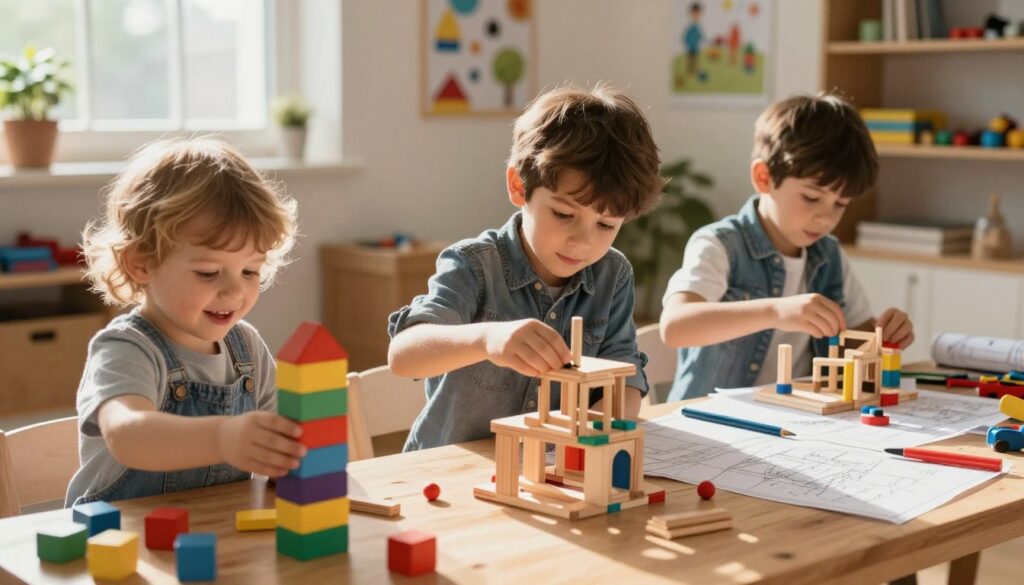
Building games do not have to be expensive. Some of the best construction play materials are simple household objects.
The most useful materials are open-ended. That means children can use them in many different ways.
Essential Materials for Creative Construction
Here are practical materials to keep available:
- wooden blocks
- magnetic tiles
- interlocking bricks
- cardboard boxes
- paper tubes
- plastic cups
- craft sticks
- pillows and blankets
- recycled containers
- stones, sticks, and leaves
- toy animals or toy cars
Wooden blocks are excellent for balance and structure. Magnetic tiles are useful for shape building and early geometry. Cardboard boxes are perfect for large-scale creativity. Recycled materials invite children to invent freely.
The best toy is not always the most expensive one. The best toy is the one your child can use in many different ways.
Classic Indoor Building Activities
Indoor building games are helpful on rainy days, winter days, or quiet afternoons at home.
Try these simple activities:
- build a pillow fort
- create a cardboard box castle
- build a tower with plastic cups
- make a road with blocks
- build a garage for toy cars
- create a house for stuffed animals
- build a blanket tent
- design a small city on the floor
A pillow fort teaches planning and spatial awareness. A cardboard castle encourages creativity and storytelling. A plastic cup tower teaches balance and patience.
Exploring Nature Through Structural Play
Outdoor building games help children connect construction play with nature.
Try these nature-based ideas:
- build a stick house
- stack flat stones
- create a bug hotel
- build a sandcastle
- make a leaf roof
- build a tiny fairy house
- create a nature bridge
- design an animal shelter with sticks and leaves
Always check materials for safety. Avoid sharp sticks, unstable rocks, poisonous plants, and protected habitats.
Nature building games help children observe textures, weight, balance, and the natural world.
Supporting Your Child During Building Sessions
Your role is not to control the project. Your role is to support thinking.
Instead of giving instructions, ask open-ended questions:
“What are you building?”
“What do you need next?”
“What could make it stronger?”
“What happened when it fell?”
“What would you like to try again?”
Try not to correct too quickly. If the structure is safe, let your child test their own ideas. This builds independence.
Praise the process more than the result:
“I noticed how carefully you placed that piece.”
“You kept trying even when it fell.”
“You had an interesting idea.”
“You solved that problem in your own way.”
These small comments help children value effort, creativity, and persistence.
Digital Building Tools: When Screens Can Support Construction Play
Hands-on building should stay at the center of construction play, especially for young children. However, some digital building tools can support creativity and planning when used in moderation.
Digital building games can help children practice:
- planning
- patterns
- spatial thinking
- design
- sequencing
- creative storytelling
For older children, sandbox-style games can encourage large-scale design and imaginative construction. For younger children, simple building apps may introduce shapes, patterns, and cause and effect.
The key is balance. Digital tools should not replace real blocks, cardboard, outdoor play, or hands-on construction.
A healthy routine might look like this:
- 20 minutes of hands-on building with blocks, boxes, or magnetic tiles
- 10 minutes of a focused digital building activity
- a follow-up challenge to recreate the digital idea with real materials
Parents should always check age ratings, privacy settings, ads, in-app purchases, and online communication features before allowing children to use digital tools.
Safety Considerations for Young Builders
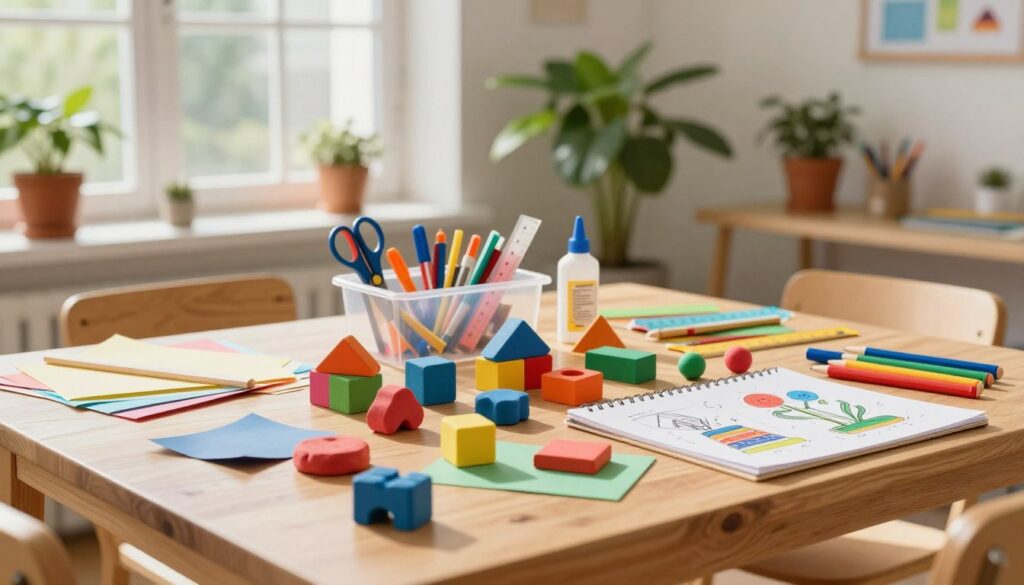
Building games are usually safe, but adults still need to prepare the space and materials carefully.
For toddlers, avoid small pieces that could be choking hazards. Choose large, rounded, non-toxic materials. Supervise closely when children use boxes, blankets, or larger structures.
For preschoolers, check that towers, forts, or cardboard structures are stable. Avoid heavy objects that could fall. Keep scissors, tape, and craft tools age-appropriate.
For older children, encourage safe testing. If they build ramps, bridges, or tall structures, make sure the area is clear and the materials are not dangerous.
Basic safety tips:
- choose age-appropriate materials
- avoid small parts for children under 3
- check for sharp edges
- keep walkways clear
- supervise large structures
- use soft materials for forts
- teach children not to climb unstable builds
- inspect recycled materials before use
Safety does not mean stopping creativity. It means creating a space where children can explore freely and confidently.
FAQ About Building Games and Child Growth
What are building games for children?
Building games are activities where children create structures, objects, scenes, or designs using materials such as blocks, bricks, boxes, magnetic tiles, sticks, cups, or recycled items.
Why are building games important for child development?
Building games help children practice problem-solving, spatial reasoning, planning, creativity, fine motor skills, patience, and confidence.
Do building games help with brain development?
Yes. Building games encourage children to plan, predict, test, adjust, and remember how objects fit together. These actions support important thinking skills.
Can building games improve math and STEM skills?
Building games can support early math and STEM learning by helping children explore shapes, balance, measurement, patterns, size, stability, and cause and effect.
What age should children start building games?
Children can begin simple building play as toddlers, using large safe blocks, stacking cups, pillows, or boxes. As they grow, they can use more complex materials and challenges.
What are the best materials for building games?
Good materials include wooden blocks, magnetic tiles, interlocking bricks, cardboard boxes, plastic cups, paper tubes, pillows, recycled containers, sticks, stones, and natural materials.
How do building games help children develop patience?
Building games often involve trial and error. When structures fall, children learn to try again, adjust their plan, and keep working toward a goal.
Can building games help shy children?
Yes. Building games can help shy children express ideas, work independently, or join group play in a low-pressure way.
Are digital building games good for children?
Some digital building tools can support planning and creativity, especially for older children. However, they should be used in moderation and balanced with hands-on construction play.
How can parents support building games at home?
Parents can provide safe materials, create a small building area, ask open-ended questions, praise effort, and allow children to lead the play.
Conclusion
Building games are more than simple play. They help children think, test, imagine, build, fail, adjust, and try again. These experiences support brain development, problem-solving, spatial reasoning, early STEM skills, patience, confidence, and emotional growth.
A child building a tower is not only stacking blocks. They are learning how ideas become real. They are discovering how effort creates progress. They are practicing skills that matter in school, relationships, and everyday life.
You do not need expensive toys to begin. A few blocks, boxes, pillows, cups, sticks, or recycled materials can open the door to powerful learning.
Start small. Offer safe materials. Ask one thoughtful question. Let your child lead.
The next time a tower falls, remember: that is not the end of the game. That is where the learning begins.