
Can a morning without a tablet spark more energy, better sleep, and real learning for your child?
This guide offers practical, age-appropriate play ideas tested by parents and educators. You’ll find fun activities for home, outdoors, and rainy days. Plus, there are chore-based activities and simple gear suggestions like a mini trampoline or Nugget couch for safe indoor fun.
We balance the evidence on risks from too much screen time with realistic alternatives. This way, you can choose what fits your family. Expect short, tested activities for toddlers and preschoolers, low-prep outdoor games, and creative movement ideas that build strength, coordination, and focus.
For more gross-motor inspiration and playful setups that boost balance and coordination, explore a focused list of activities here: physical play ideas to boost gross motor.
Key Takeaways
- Screen-free physical activities for kids can improve sleep, mood, and school readiness.
- Active play includes simple indoor and outdoor options you can rotate daily.
- Alternatives to screen time don’t require special skills—just a bit of planning and the right gear.
- Focus on short, age-appropriate activities to replace morning or after-school TV.
- Use tested ideas and revisit this list to keep play fresh and engaging for your child.
Why you should prioritize screen-free physical activities for kids
Swapping device time for play is easy. It boosts sleep, motor skills, and mood. Short play sessions fit into busy days.
Physical, cognitive, and emotional benefits
Active play improves heart health and coordination. It also enhances fine motor skills through activities like Play-Doh and threading.
It boosts attention and problem-solving skills. Pretend play and games teach empathy and social skills. Regular movement leads to better moods and fewer tantrums.
How active play supports developmental milestones
Activities help track progress in motor skills. Toddlers practice important milestones like climbing and jumping. Preschoolers improve hand-eye coordination with throwing and arts-and-crafts.
Use playful routines to support milestones without stress. Age-appropriate tasks feel like games, not tests. For more information, see active play and child health.
Balancing screen time without guilt
You don’t need to be perfect. Simple swaps like walks and bike rides replace screen time. These changes highlight the benefits of active play without making parenting a fight.
Accept that screens have their place. Focus on making steady changes. Set simple rules, like device-free mealtimes. This approach helps reduce screen time without guilt and keeps family life calm.
Related Guides on Screen-Free Physical Play and Healthy Screen Habits
Replacing screen time does not have to feel strict or stressful. These related guides offer practical ways to help kids move more, sit less, build healthier routines, and enjoy active play as a natural alternative to tablets, TV, and long screen sessions.
- Best Physical Games as Screen Time Alternatives for Kids
- How Active Play Helps Kids Sit Less and Move More
- Physical Games vs Screen Time: Benefits of Active Play for Kids
- How to Add Movement and Active Play to Your Child’s Daily Routine
- How Physical Games Help Kids Spend Less Time on Tablets and TV
- Best Screen-Free Movement Games for Healthy Kids
- Why Active Play Works Better Than Limiting Screen Time for Kids
- How to Replace Screen Time With Physical Play for Kids
- How Physical Games Help Kids Have a Healthier Relationship With Screens
- Why Kids Need Regular Movement Breaks From Screens Every Day
Outdoor games for children that get kids moving
Fresh air makes play feel new. You can pick simple ideas that fit your yard, local park, or a short walk down the block. Use low-cost gear like rain boots, a kid flashlight, or a frisbee to keep games easy and ready.
Classic playground games to try: kickball, tag, and frisbee
Kickball helps your child practice running, throwing, and teamwork. Set small rules so everyone gets turns and feels safe.
Tag can be quick or slow, depending on ages. Try freeze tag to encourage listening and balance.
Frisbee works for hand-eye coordination. Toss in targets or set distance challenges for older kids.
Nature-based outdoor activities: bug walks, cloud watching, and scavenger hunts
Bug walks invite curiosity. Bring a magnifying glass and a simple field guide or use an app like Merlin for bird and insect ID.
Cloud watching teaches observation and calm. Ask kids to describe shapes or make up short stories about what they see.
A neighborhood scavenger hunt turns a walk into a mission. Create printable lists for items like a red leaf, a mailbox, or a smooth rock. Use a click counter for counting walks or repeat finds.
Low-prep neighborhood ideas: bike rides, bird-watching, and backyard camping
Bike rides or scooter trips give you a planned destination, such as a nearby playground or ice cream shop. Bring a helmet and a bike trailer for mixed-energy outings.
Bird-watching for kids pairs well with short outings. Use the Merlin Bird ID app to help kids spot and name common backyard birds.
Backyard camping offers the thrill of an overnight without travel. Pitch a tent, pack flashlights, and roast marshmallows to make it feel special.
| Activity | What you need | Skills practiced |
|---|---|---|
| Kickball | Ball, bases (cones) | Running, kicking, teamwork |
| Tag (freeze or shadow) | Open space, optional bandanas | Speed, agility, rule-following |
| Frisbee challenges | Frisbee, targets | Throwing accuracy, coordination |
| Bug walk | Magnifier, small jar, field guide or app | Observation, patience, science curiosity |
| Neighborhood scavenger hunt | Printable list, bag for finds | Focus, counting, map skills |
| Bird-watching for kids | Binoculars, Merlin app | Listening, ID skills, attention to detail |
| Backyard camping | Tent, flashlights, warm layers | Independence, planning, outdoor comfort |
Active play ideas for toddlers to build motor skills
Give your toddler short bursts of play that build strength, balance, and coordination. Set up soft routes using couch cushions and painter’s tape to mark paths. These simple layouts turn everyday rooms into a toddler obstacle course without expensive gear.
Keep materials basic so you can change activities often. Use pillows for climbing, towels as balance beams, and empty boxes as crawl tunnels. A mini trampoline or a ride-on plasma car helps with gross motor power when you have space indoors or in the yard.
Sensory motor activities for toddlers pair movement with touch and sound. Try treasure hunts where kids search for textured objects like beanbags and sponges. Bubble-popping and kinetic sand stations sharpen hand control and reward repeated practice.
Make a treasure-hunt list with stickers or stamps to encourage following directions. Turn sorting laundry into a game of toss-and-fold to mix chores with play. These moments add purposeful repetition that supports fine motor skills.
Movement games for preschoolers should be short and active. Hopscotch made with painter’s tape, jump rope songs, and hula hoop challenges increase coordination. Use simple yoga poses from Cosmic Kids Yoga cards to teach balance and calm breathing.
Freeze Dance and follow-the-leader variations are great for rooms with limited space. Add a stopwatch or kitchen timer to introduce gentle competition and time-based goals that keep attention high.
For indoor rainy day activities, build pillow forts and a cozy dance corner with a low-stakes playlist. Balloons for gentle volleying and soft beanbag tosses let kids expend energy safely. Rotate toys like Play-Doh, sticker books, and stamp pads to keep fingers busy.
Prepare a safe play zone with an exercise mat, clear floor space, and shoe-free play. Store a small bin with bubbles, balloons, and hopscotch tape so you can launch an activity quickly on wet days.
| Activity | What it works | Supplies | Why it helps |
|---|---|---|---|
| Simple obstacle course | Balance, coordination, planning | Pillows, tape, boxes | Encourages problem solving while moving through space |
| Treasure hunt | Fine motor, sensory processing | Textured objects, stickers, small baskets | Combines searching with tactile feedback to build control |
| Mini trampoline or plasma car | Leg strength, vestibular sense | Mini trampoline, ride-on car | Safe repetitive motion develops balance and stamina |
| Jump rope & hula hoop | Rhythm, coordination | Rope, hoop, open space | Promotes timing and bilateral coordination |
| Pillow forts & dance corners | Imagination, gross motor play | Pillows, blankets, music player | Encourages creative movement during indoor rainy day activities |
| Play-Doh & kinetic sand | Fine motor strength, sensory regulation | Modeling dough, sand tray, stamps | Handwork promotes pincer grasp and bilateral hand use |
Creative play ideas for children to spark imagination and movement
Let your kids play where their imagination takes them. Use simple props and open spaces. Add short challenges that mix pretend with physical action. These ideas turn quiet craft time into fun and keep the day active without screens.
Use saved costumes, hats, and scarves for quick scenes. Try a pretend restaurant, vet clinic, or busy train station. Set a mission, like the chef carrying three foam plates on a balance beam to serve customers.
Puppet shows from cardboard boxes are great. They improve small motor skills and storytelling. Kids can leap between characters.
DIY active projects
Choose DIY projects that need movement. Building forts with blankets and cushions teaches planning. It works big muscles.
Cardboard construction with Makedo tools invites cutting and folding. It also means running around to check designs. A simple birdhouse build combines hammering with outdoor flights to hang the finished piece.
Arts-and-movement activities
Set up washable paints outside for rock painting or giant floor murals. Turn a nature walk into a collecting mission for a collage. Have kids gather leaves, twigs, and petals and race back to glue them in place.
Parade creation blends costume-making with marching, drumming, and banner waving. It ends with a short block parade.
Keep materials safe: use non-toxic, washable supplies. Skip glitter and tiny beads for young children. Combine cleanup with a tidy-up scavenger hunt to add more movement and make chores playful.
| Activity | What to prepare | Movement value | Age range |
|---|---|---|---|
| Dress-up café | Costumes, play dishes, menu cards | Carrying trays, balancing, role changes | 3–8 years |
| Fort-building challenge | Blankets, cushions, clothespins, cardboard | Crawling, lifting, negotiating space | 2–10 years |
| Cardboard puppet show | Cardboard box, markers, safe scissors | Hand motions, staging, voice projection | 3–9 years |
| Birdhouse mini-build | Precut wood kit, small hammer, nails | Holding, hammering, walking to hang | 5–12 years |
| Rock painting station | Washable paints, brushes, covered table | Fine motor control, outdoors movement | 3–11 years |
| Nature collage walk | Glue, paper base, collection bag | Walking, bending, sorting materials | 2–10 years |
| Mini neighborhood parade | Banners, small instruments, costumes | Marching, rhythm, group coordination | 4–12 years |
Non-digital activities for kids you can do as a family
Make a weekend or a quick break into a fun family habit. Start with simple fitness challenges like a three-minute plank contest. Try a relay of jumping jacks or stopwatch laps around the yard. Keep it easy so kids feel they’ve done well, then add more challenges.
Family fitness challenges and short routines
Make quick workouts fit your busy schedule. Try a five-move circuit: squats, lunges, arm circles, bear crawls, and a one-minute dance. Use a timer to make it a fun game. Let everyone choose the next move to keep things exciting.
For little ones, try gentle games like hopscotch or animal races. For more ideas, check out active preschool games.
Board games and active group games that encourage collaboration
Play active board games that get everyone moving. Classics like Don’t Break the Ice or cooperative games teach teamwork. Add a twist by doing a movement task when you roll a six.
Host a game night with table games and short activities. Have a two-song dance break after each round. Use devices like Yoto Player or Toniebox for stories between games.
Shared projects: gardening, cooking, and community volunteering
Work on projects together to build lasting habits. Start a family garden with easy tasks like sowing seeds. Kids learn responsibility and get fresh air.
In the kitchen, give kids safe jobs like stirring or decorating. Turn chores into a team effort by timing and celebrating wins.
Volunteer together for a sense of purpose. Pack care packages, join a cleanup, or visit a garden program. These activities teach service without screens.
| Activity | Age Range | Time Needed | Key Benefit |
|---|---|---|---|
| Three-minute family fitness circuit | Preschool–School age | 3–10 minutes | Builds stamina and routine |
| Active board games for families with movement breaks | Toddler–School age | 20–60 minutes | Encourages cooperation and motor skills |
| Family gardening projects (seed-to-harvest) | Preschool–Teen | Weekly sessions | Teaches responsibility and science basics |
| Cooking together: prep and decorate | Preschool–Teen | 30–60 minutes | Develops fine motor and math skills |
| Community volunteering (cleanups, care packs) | School age–Teen | 1–3 hours | Builds empathy and civic awareness |
No technology activities for kids that work on the go
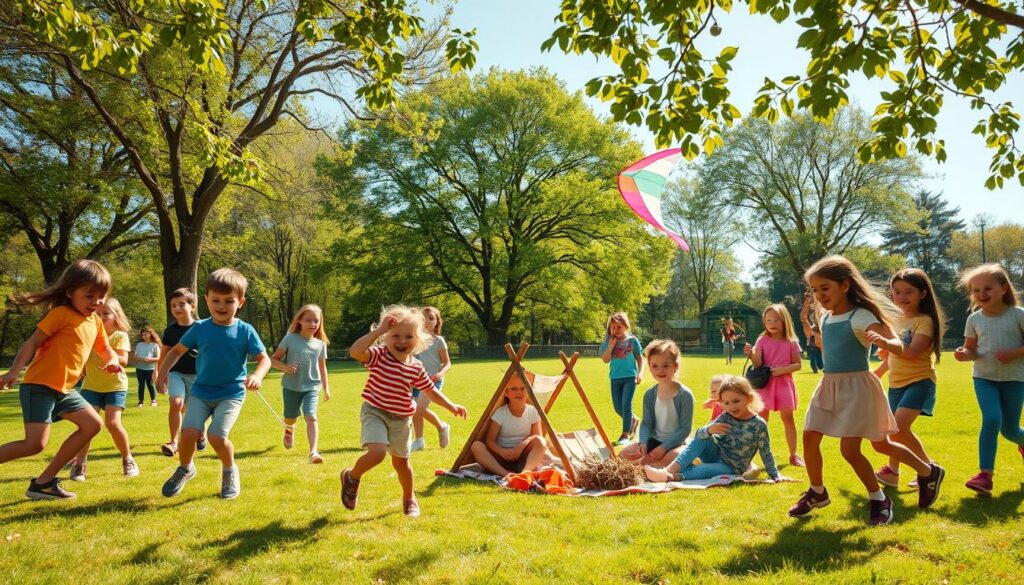
Make travel time fun and creative with simple ideas. Pack a small kit and set short timers. Swap screen time for hands-on activities that keep everyone moving and curious.
Travel-friendly play: car games, I-spy, and number/color hunts
Play classic car games like I-spy and license-plate hunts. These games turn windows into learning zones. Short games make long trips fun and predictable.
Try stopwatch challenges like counting red cars in five minutes. These games improve attention and reduce boredom without screens.
Playbags and activity kits to avoid strops when out and about
Make playbags for outings with reusable sticker books and puzzles. Choose items from Michaels or JOANN and keep them in a labeled pouch. This makes them easy to find.
Add sensory options like kinetic-sand tubs or bubbles. Rotate contents to keep things new. Use a checklist so your child can help pack and feel involved.
Quick swaps for transition moments: timers, checklists, and stopwatch challenges
Use visual checklists for transitions like getting ready or entering a restaurant. Timers make tasks clear and fun.
Try short physical tasks like a lap around the car or three jumping jacks. These activities calm resistance and build routine without screens.
For ideas on building and hands-on thinking on the go, check out construction play. Mix structured kits with loose items to match challenges to age and energy.
| Situation | Compact activity | Why it works |
|---|---|---|
| Short car ride (under 30 min) | Car games for children: I-spy, license-plate bingo | Quick, low-prep, keeps attention with verbal play |
| Long drive | Travel-friendly play for kids: reusable sticker books, card games | Hands-on, reusable, reduces repeated requests for screens |
| Restaurant wait | Playbags for outings: small puzzles, rubber stamps, crayons | Calming, encourages fine motor skills and independent focus |
| Transition moments | Timer challenges & checklists | Creates predictability, lowers meltdowns, builds self-regulation |
| Parks and rest stops | Portable bubble containers, mini sand tubs, nature scavenger lists | Gross motor play plus sensory variety, engages exploration |
Physical movement games for preschoolers that teach coordination
Help your child improve coordination with fun, short games. Choose simple activities you can do every day. This boosts their confidence and motor skills. Use things you have at home to make it easy and fun.
Animal movement games and mimicry for gross motor development
Make movement a fun story. Ask your child to crawl like a bear, jump like a frog, or walk like a crab. These games help strengthen their shoulders, hips, and core. They also improve their sense of space.
Play Simon Says with fast commands to get them moving quickly. Use a timer or a song to keep it short. This helps them build up their stamina.
Target games and throwing practice: indoor bulls-eye and outdoor tossing
Make indoor targets with colored tape on the floor or wall. Toss soft balls into laundry baskets at different distances. These games improve hand-eye coordination and teach aiming and judging distances.
Go outside for longer throws with beanbags or foam balls. Set up simple scoring for fun, but focus on effort and improvement.
Balance and strength builders: tree climbing, handstands, and trampoline play
Start with short, supervised balance challenges. Have your child walk on a tape “balance beam,” step from cushion to cushion, or balance on one foot while counting. These activities improve balance and coordination.
Use a mini trampoline with a safety handle for jumping. This boosts leg strength and helps with balance. Teach wall-assisted handstands on soft mats to improve shoulder stability and body awareness.
| Activity | Skill Focus | Equipment | Safety Tip |
|---|---|---|---|
| Bear crawl & frog jumps | Core strength, coordination | Soft rug or mat | Clear floor, supervise |
| Simon Says (movement) | Reaction time, following directions | Music or timer | Keep commands simple |
| Indoor bulls-eye | Hand-eye coordination, aim | Colored tape, soft balls | Tape at safe height for preschoolers |
| Outdoor tossing | Throwing distance, accuracy | Beanbags, laundry baskets | Pick open area, supervise |
| Tape balance beam | Balance activities for kids, focus | Colored tape | Start close to ground |
| Mini trampoline with handle | Leg strength, vestibular control | Mini trampoline, handle | One child at a time, soft mat |
| Wall-assisted handstands | Shoulder strength, body alignment | Soft mat | Spot child, progress gradually |
Keep activities short and fun. Mix up the games so your child enjoys a variety. Always praise their efforts and adjust the difficulty. Always watch them during climbing and trampoline play to keep them safe.
Fun exercises for kids that double as learning activities
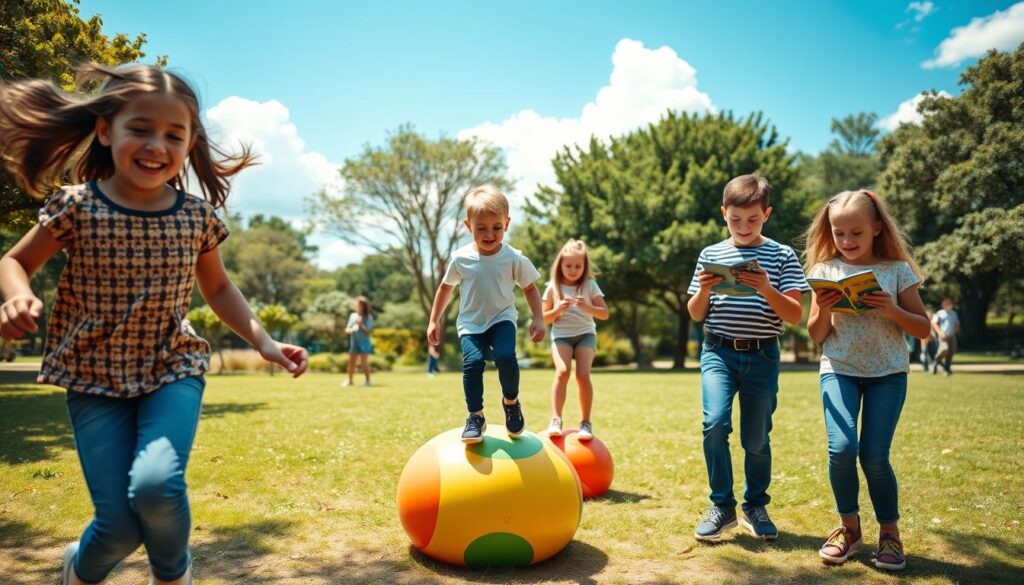
Make active time a learning adventure. Mix play with learning through simple activities. These can teach counting, spelling, and problem-solving while kids get to move around.
Counting, spelling, and math through movement games
Use hopscotch to practice number order and skip counting. Set up numbered mats for kids to jump on while you call out math facts. Jumping jacks can teach counting speed and measurement with a stopwatch.
Create a paper-plane target practice with scores to learn addition and subtraction. Try treasure hunts with clues that name letters or sight words. Kids spell words by stepping on letter mats. These games mix physical activity with math and literacy.
Memory and language skills via action songs and poem recitation
Sing action songs to boost memory and sequencing during warm-ups. Simple nursery rhymes or poems anchor movement patterns. Cosmic Kids Yoga and story-based sessions help build vocabulary while kids stay active.
Turn verses into movement challenges. Each line prompts a specific action. This helps kids remember words and phrases better while practicing rhythm and expressive speech.
Using challenges and timers to build goal-setting and self-regulation
Introduce timed challenges to teach planning and persistence. Challenge your child to beat their previous hop count in one minute. Use checklists and reward charts to track progress and celebrate effort.
Combine challenge-based play with daily tasks. Count steps while carrying laundry or spell a grocery list aloud on a walk. These activities promote self-regulation and show how movement-based learning fits into everyday life.
How to make screen swaps stick: strategies parents can use
Begin with small, achievable changes. Show your kids how to use devices wisely by setting limits yourself. Remember, screens are okay but shouldn’t fill the whole day. Plan your swaps to make the transition smooth and clear.
Use simple tools to help with swaps. Timers, checklists, and a family calendar can make routines clear. Turn chores into fun by timing them or adding energy to tasks. This way, you teach your kids without long talks.
Choose swap ideas that fit the moment. At bedtime, try quiet reading or gentle yoga. During travel, bring simple games and scavenger hunts. Homework breaks can include quick outdoor play, stretching, or a short snack walk.
. These ideas make swaps easier to accept.
Give gentle rewards to keep the momentum going. Use a sticker chart for small goals or extra story time after a week. Choose rewards that feel special, like picking a family activity.
Make swaps a family effort to avoid feeling left out. Have a weekly planning session to plan screen-free times and swaps. Let kids suggest ideas to make them feel included. This approach keeps swaps fair and practical for everyone.
See boredom as a chance to learn and be creative. When kids have quiet time, they often come up with better games. Keep rainy day kits ready, craft supplies handy, and list activities near doors. A prepared family wins more swaps.
Below is a quick guide for home use. It pairs common routines with swaps and rewards to help you make lasting changes.
| Routine | Ready Swap | Tools to Prepare | Rewards for Screen-Free Play |
|---|---|---|---|
| Morning | Short family walk or stretch session | Weather shoes, quick playlist, stopwatch | Extra choice at breakfast (fruit or cereal) |
| After school | Outdoor play or art time | Sidewalk chalk, sketch pads, small sports gear | Sticker toward a weekend activity |
| Homework breaks | Five-minute movement break or tidy-up race | Timer, small basket for clutter, upbeat music | One extra 10-minute free play |
| Chore time | Timed scavenger hunt to complete tasks | Checklist, small rewards, laundry baskets | Family points toward larger reward |
| Bedtime | Quiet reading, breathing exercises, gentle yoga | Nightlight, cozy books, yoga cards for kids | Pick tomorrow’s bedtime story |
| Travel | Car games, I-spy, countdown challenges | Activity cards, travel journal, snacks | First pick of activity at destination |
Conclusion
You now have a practical roadmap for swapping screens with play. You can mix easy, tested options like backyard races and quiet crafts into daily life. This way, you can add screen-free physical activities for kids without stress.
Save a handful of favorites and pack simple playbags. Set clear, pragmatic rules to keep play safe and fun. This will help you enjoy the process.
Small swaps make a big difference. Replace a morning show with a short family walk or an active game. You’ll find routines stick when they feel doable.
For ideas to plan a full weekend of connection, see a roundup of family-friendly, screen-free ideas here: screen-free weekend activities.
Remember the long-term benefits of active play. Stronger bodies, sharper attention, better sleep, and calmer moods are just a few. Mixing non-digital activities for kids with occasional thoughtful screen use creates balance, not deprivation.
Keep experimenting, involve your children in choices, and use timers and checklists to sustain momentum. This will help you stay on track.
Physical play is more than fun—it’s an investment in health and learning. For research-backed benefits and movement guidelines to support your plan, explore this resource: benefits of physical play. Choose a few approachable swaps, prepare basic gear, and enjoy the stronger family bonds that follow.