Can a simple board game be the step that turns your toddler’s free play into confident rule-following and ready-for-kindergarten skills?
We’re looking for games that mix fun and learning. This guide focuses on games that 3 to 5 year olds can enjoy. These games introduce simple rules and structure, but they’re fun.
Interactive games for 3-5 year olds teach counting, letters, and following directions. They make learning fun without feeling like a lesson. Guided play and gameschooling make learning a natural part of family time or homeschool breaks.
Families often grow their game collections over time. They adapt games like Candy Land or memory matches for younger players. Reviews from Wirecutter help find the best games for family game nights here.
Choosing the right games for preschoolers has real benefits. They help with group routines, listening, social play, and starting family game nights. These games are short, fun, and easy to store, making them perfect for parents, caregivers, and teachers.
Why choose first games with rules kids ages 3 to 5
You want play that teaches without pressure. Rule-based play is great for preschoolers. The right games turn short attention spans into steady learning moments.
Developmental benefits for preschoolers
Games with simple rules boost executive function. Your child learns to take turns, follow steps, and wait. This builds impulse control and sequencing skills.
These activities also improve fine motor control. Children practice moving pieces, matching cards, or spinning spinners.
Social skills grow during guided play. Children learn to share, negotiate, and read social cues. Games like Sequence for Kids and Zingo show how pattern recognition and turn-taking reinforce memory and spatial awareness.
Choose developmental games for young kids that emphasize play over competition.
Educational gains from guided play
Guided play turns toys into learning tools. You can bring math to life by counting pieces, grouping tokens, or comparing sets. Gameschooling makes number sense easier to grasp with hands-on examples.
Language skills improve with word-building activities. Zingo and Scrabble Junior adapt well to preschool needs by boosting vocabulary and sentence construction. Science concepts come alive in themed games that encourage observation and prediction.
Use fun learning activities for young children to reinforce classroom skills in a playful setting.
Why start with easy games for toddlers and preschoolers
Younger children need short, clear rules and simple goals. Easy games for toddlers reduce frustration and keep motivation high. Cooperative formats work well because they focus on shared success.
Begin with scaled-down versions of family favorites. Adapted rules let your child experience success and build confidence before introducing more complex mechanics. Look for educational games for preschoolers that offer gradual challenges and repeatable routines.
| Skill | Example Game | How it Helps |
|---|---|---|
| Executive function | Sequence for Kids | Teaches sequencing, turn-taking, and rule-following |
| Early numeracy | I Sea 10! | Builds counting, subitizing, and basic addition through play |
| Vocabulary & literacy | Zingo, Scrabble Junior | Encourages word recognition, spelling, and expressive language |
| Fine motor | Stacking and matching games | Improves hand-eye coordination and manipulation of small pieces |
| Social skills | Cooperative board games | Promotes sharing, turn-taking, and collaborative problem solving |
Related Guides on First Games With Rules for Preschoolers
If you want more specific ideas, these related guides can help you choose simple, age-appropriate, low-frustration games that teach preschoolers how to follow rules, take turns, match cards, play gently, and enjoy their first board games.
- Best First Games With Rules for Kids Ages 3 to 5: A Parent’s Guide
- Best Rule-Based Games for Preschoolers That Kids Can Actually Follow
- Best Beginner Board Games for Preschoolers: What to Choose and Avoid
- Best Turn-Based Games for 3, 4, and 5 Year Olds
- Best Preschool Games With Easy Rules for Home, Daycare, and Playdates
- Best Short Games for Preschoolers With Short Attention Spans
- Best First Tabletop Games for Preschoolers to Learn Rules Gently
- Best Matching and Card Games for Kids Ages 3 to 5
- How to Choose the Best First Games With Rules for Preschoolers
- Best Low-Frustration Games for Preschoolers Learning to Take Turns
How to pick the right games for ages 3 to 5
Choosing toys for preschoolers is all about balance. Look for games that are short, safe, and fun. Start with games that last 5–20 minutes. Choose toys that encourage touching, stacking, and sorting.
Games with simple rules help kids learn patience. They also learn about following rules without getting frustrated. For many families, games that are easy to start with are a big hit.
Assessing attention span and motor skills
See how long your child can focus on a toy. If they play for five minutes, pick games made for short play. If they can stack blocks, try games that need a bit more skill.
Games like Zingo are great for young kids. As they get better, try games that challenge their memory and decision-making.
Matching game complexity to your child
Start with games that are easy and fun. Look for games that don’t make kids feel stressed. When they get the hang of simple games, introduce games with a bit more strategy.
Choose games that your child finds interesting. Animals, trains, and food are often big hits. You can make family games easier by cutting down the number of rounds or removing scoring.
Safety, pieces, and storage considerations
For kids under three, avoid small pieces that can be a choking hazard. For kids aged three to five, choose bigger pieces and sturdy cards. These games can handle rough play and are easy to play again and again.
Think about how easy the game is to set up and store. Look for games that are easy to clean up and put away. This makes it more likely that your child will play the game often.
Some games are better for adults or older kids. For preschoolers, choose games that are easy to understand and fun. These games should be durable and have clear rules.
Top cooperative games to teach sharing and teamwork
Simple cooperative games can teach kids to share, take turns, and follow rules. They fit well into your daily routine when introducing games to kids aged 3 to 5. These games help lower frustration and teach empathy as kids learn to work together.
Cooperative games focus on shared goals, not competition. This format allows you to model communication and problem-solving. Young children enjoy the predictability and teamwork rewards of these games.
Why cooperative games work for young children
Cooperative play reduces competition and failure feelings. It teaches kids to take turns and help each other without focusing on one person.
Winning as a group celebrates effort, not just scores. This approach boosts social skills and makes following rules rewarding.
Recommended cooperative picks and adaptations
Choose games that involve matching, color sorting, or shared goals. Shorten Fish n’ Flip decks and limit turns for a better experience. Wildcraft! becomes easier with fewer steps and team narration.
Adapt complex games by shortening rounds, removing pieces, or adding an adult guide. An adult can help keep play smooth and prevent frustration.
| Game or Format | Why it works | Simple adaptations |
|---|---|---|
| Fish n’ Flip | Card matching with a rescue theme encourages turn-taking and shared goals. | Use fewer cards, limit to three matches per round, and let players announce matches aloud. |
| Wildcraft! | Collaborative storytelling and foraging teach planning and verbal skills. | Reduce path spaces, narrate steps, and let children decide one group move each turn. |
| Color-collection board | Simple color sorting gives clear, visible progress and a common objective. | Use larger tokens, shorter target counts, and celebrate when the group reaches milestones. |
| Matching-and-rescue format | Familiar mechanics speed learning and focus on cooperation over winning. | Combine matching with a shared board and allow teammates to trade one token per turn. |
Introduce cooperative games for preschoolers with short, fun sessions. Use prompts like “How can we help?” to encourage teamwork. These steps make learning fun for young children and prepare them for more structured games.
Best counting and number games for early math skills
Games should make numbers fun and real. Start with simple activities that match objects and numbers. Use counters and show sums visually. These methods help with number sense without feeling forced.
Number sense activities built into play
Begin by matching quantities to numerals with beads, blocks, or sticker sheets. Let your child group items to make 5 or 10, then count out loud together. Use dry-erase activity sheets to try little changes and repeat skills quickly.
Use visual balances and manipulatives to show how amounts shift when you add or take away items. A simple seesaw with pom-poms makes the idea of equality concrete. These low-pressure tasks work best in short sessions you both enjoy.
Game examples that teach counting and math foundations
Choose proven titles and gentle adaptations to build math fluency. I Sea 10! helps kids combine cards to make sums of ten. Tiny Polka Dot encourages counting and basic arithmetic through clear mechanics. Balance Beans introduces balancing ideas you can simplify by focusing on matching visuals.
Simplified classics help too. Play Shut the Box with an adult guiding addition steps. Try a Yahtzee-style roll-and-count set with oversized foam dice for tactile learning. These educational games for preschoolers make rules predictable and outcomes satisfying for young players.
Keep these practical tips in mind: teach one math idea at a time, narrate your thinking, and scaffold counting with fingers or counters. Use repeated, short sessions and dry-erase sheets for extra practice to build confidence.
For outdoor spins on listening and number prompts, try adaptations like Simon Says combined with counting actions. You can find fresh movement-based ideas in resources such as outdoor activity guides to pair physical play with math goals.
| Game | Core skill | How to adapt for ages 3–5 |
|---|---|---|
| I Sea 10! | Making sums to 10, number combinations | Limit cards to smaller sets; use coins or counters to represent sums visually |
| Tiny Polka Dot | Counting, simple addition | Reduce scoring to single-digit totals; let children count pieces out loud |
| Balance Beans | Pre-algebra ideas, balance and comparison | Use visual matching on the seesaw; skip numeric equations for younger players |
| Shut the Box (simplified) | Addition, decision-making | Play cooperatively; adults suggest pairs that add to small totals |
| Modified Yahtzee with foam dice | Counting, set recognition | Use one or two dice; count pips together and mark sums with stickers |
These counting games for preschoolers offer a gentle bridge from play to purposeful learning. They rank among the best first games with rules kids ages 3 to 5 can handle while you guide practice and praise progress.
When you pick activities, favor short, repeatable rounds that let your child experience success. That keeps math friendly and helps these developmental games for young kids become part of daily play.
Letter, vocabulary, and early literacy games
Kids learn letters and sounds best when it’s fun. Mix short, hands-on activities into daily life to help them recognize letters and sounds. Choose simple tasks that fit their focus and celebrate their successes.
Playful ways to build letter recognition and phonics
Use tactile letter tiles or magnetic letters for sorting. Ask your child to match a picture to the first letter sound. Make it a game by saying a sound and having them find the matching tile.
Keep it simple. Reward their efforts, not just their results. Use pictures for non-readers to keep phonics practice fun and easy.
Kid-friendly word games and storytelling tools
Choose products that kids know and love. Zingo is great for bingo-style word recognition. Scrabble Junior and Bananagrams tiles are good for matching and simple spelling without scoring. Rory’s Story Cubes or Create-a-Story cards are great for storytelling and sequencing without the pressure of reading.
Quick games like Sight Word Swat or Snap It Up boost sight-word recall and phonics. Use Mad Libs orally with simple prompts to practice vocabulary and sentence structure.
Simple adaptations for mixed ability groups
Remove scoring and accept phonetic spellings to include everyone. Let non-readers describe pictures or tell a short sentence instead of writing. Offer picture clues, model one round, and then let them try on their own.
Below is a comparison to help you pick tools that match your goals, time, and space. Each option supports interactive learning and fits well among educational games for preschoolers and interactive games for 3-5 year olds.
| Game or Tool | Best for | How to Adapt | Benefits |
|---|---|---|---|
| Zingo | Pre-readers learning word-picture matching | Remove points; play co-op rounds | Builds recognition, quick wins, social play |
| Scrabble Junior / Bananagrams tiles | Beginner spelling and letter matching | Use tiles for matching instead of scoring | Practices letter-sound links and early spelling |
| Rory’s Story Cubes / Create-a-Story | Story sequencing and vocabulary | Simplify prompts; encourage oral storytelling | Boosts narrative skills and expressive language |
| Sight Word Swat / Snap It Up | Rapid recognition of common words | Short rounds; use pictures for support | Improves sight-word fluency and attention |
| Magnetic or foam letter tiles | Letter identification and tactile practice | Pair with picture cards for sound matching | Hands-on learning that reinforces phonics |
Simple logic and pattern games to boost reasoning
Begin with short, clear activities that show how patterns and logic work. You want games that let your child test ideas, see results, and try again. These small wins build confidence and set up skills for math and STEM learning.
How pattern and logic play helps thinking
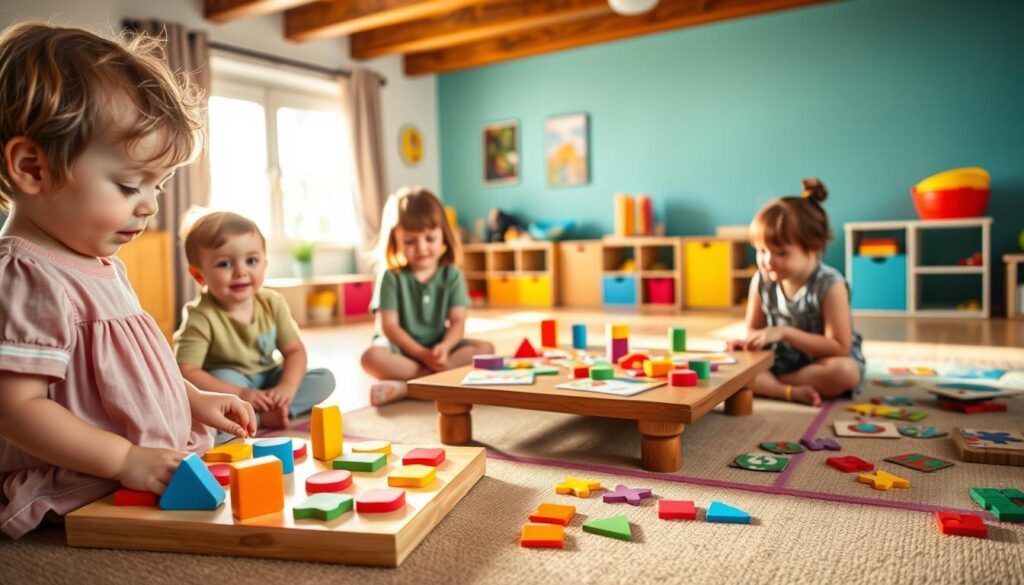
Pattern recognition and sequencing train your child’s memory and planning. Spatial puzzles teach how parts fit into a whole. Cause-and-effect tasks help your child predict outcomes and adjust strategies. Using pattern games for kids and logic games for preschoolers strengthens these foundations.
Simple game ideas you can try
- Sequence for Kids — use the original set or homemade cards. Ask your child to place three steps in order. Keep sequences to two or three items at first.
- Kanoodle and The Uzzle — choose large-piece 2D puzzles. Give one shape challenge at a time to avoid frustration.
- Mastermind (simplified) — reduce the code to two colors and offer one hint per round. Praise each correct guess to encourage persistence.
- IQ Circuit and Roller Coaster Challenge — simplify levels and guide hand placement. These teach basic engineering thinking with fewer steps.
- Laser Maze (adapted) — remove extra mirrors and set one clear goal. Help your child plan two moves ahead before testing.
How to run a short session
Present one rule at a time. Model a single round, then let your child try. Celebrate trial-and-error and highlight progress, not just correctness.
Scaffold and rotate
Rotate different developmental games for young kids to keep novelty high. Offer hints, reduce choices, or add a timer for older children. These small adjustments keep play fresh and challenging.
Active and physical games for gross motor and focus
Physical play with simple rules is great for young children. It boosts their attention and self-control. Movement and turn-taking help kids develop their gross motor skills.
Use short rounds and predictable steps. This keeps your child engaged without feeling overwhelmed.
Combining movement with rules for better engagement
Keep directions brief and consistent. Tell your child one rule, demonstrate it, then let them try. Movement helps children process instructions and manage impulses.
Set boundaries that emphasize safety: soft surfaces, large pieces, and clear start and stop cues. Praise effort for following rules, not just winning. This reinforces self-regulation while building strength and coordination.
Examples of easy active games
Jenga-style stacking with oversized blocks works well for teaching turn-taking and fine motor control. Choose larger sets like Mega Bloks or toddler-friendly wooden towers so pieces are safe and simple to grasp.
Play movement-based “follow the rule” games such as Simon Says or color-hop. In color-hop, children move to mats picked from a stack of color cards. You can make the cards from index cards or picture-clue cards for a short scavenger hunt that blends running with listening.
Turn rapid-action card games into active challenges. Reveal a matching card and ask the child to do a quick task—hop three times, crawl like a bear, or spin once—before keeping the card. This keeps rounds lively and supports memory and timing.
Include wheelbarrow walks, animal walk races, hula hoop station drills, and rolling-ball games to mix balance, core strength, and coordination. For more structured gross-motor ideas you can adapt at home, check this collection of fun learning activities for young children.
Safety notes: clear a play area, use soft materials, and limit each activity to a few minutes to match short attention spans. Swap items and tasks often to keep easy games for toddlers fresh and maintain interest.
Use these active games for preschoolers as part of a daily routine to build stamina and focus. Mixing movement with rules creates engaging games for early childhood. It teaches valuable self-control and cooperation.
Games that introduce science, nature, and discovery
You can spark curiosity with simple rules that mirror how scientists explore. Small, repeatable activities build observation skills, basic hypothesis testing, and factual knowledge about animals, plants, weather, and the human body. Pick short rounds so your child stays engaged and learns through play.
Learning science concepts through playful rules
Start with tangible themes your child already notices, like leaves, clouds, or bugs. Use clear, short rules that reward looking closely and describing what you see. For example, turn a walk into a scavenger hunt where you count leaf shapes or watch cloud types for one minute. That keeps rounds short and sharp for preschool attention spans.
Choose games that ask one question at a time. Ask: “What color is this leaf?” or “Does this object sink or float?” Those prompts teach observation, comparison, and basic prediction while keeping play fun.
Preschool adaptations of science-themed games
Tree Bingo works well when you swap complex calls for picture-only cards and smaller bingo patterns. Wildcraft! can be simplified by shortening the trail, using big picture icons, and making cooperative goals obvious. Professor Noggin’s single-topic decks suit quick Q&A; pick animal or space decks for three-question rounds.
Use Totally Gross selectively: focus on simple body vocabulary or habitats. Pair a single game round with a sensory tie-in, such as leaf matching, play-dough fossils, or a quick water test to explore buoyancy. These short extensions reinforce learning without losing momentum.
When you select educational games for preschoolers, look for clear imagery, short turns, and opportunities for hands-on follow-up. These elements make science games for preschoolers feel like everyday discovery, not formal lessons.
Lastly, rotate a few engaging games for early childhood to keep novelty high. You can adapt rules on the fly to match mood, attention, and your child’s growing questions. That keeps learning playful and memorable.
Adapting family and adult games for preschoolers
Make evenings fun by changing family games for preschoolers. Choose one goal for each session. Remove hard scoring and keep turns short, under five minutes. This makes games easy for toddlers and keeps them fun and focused.
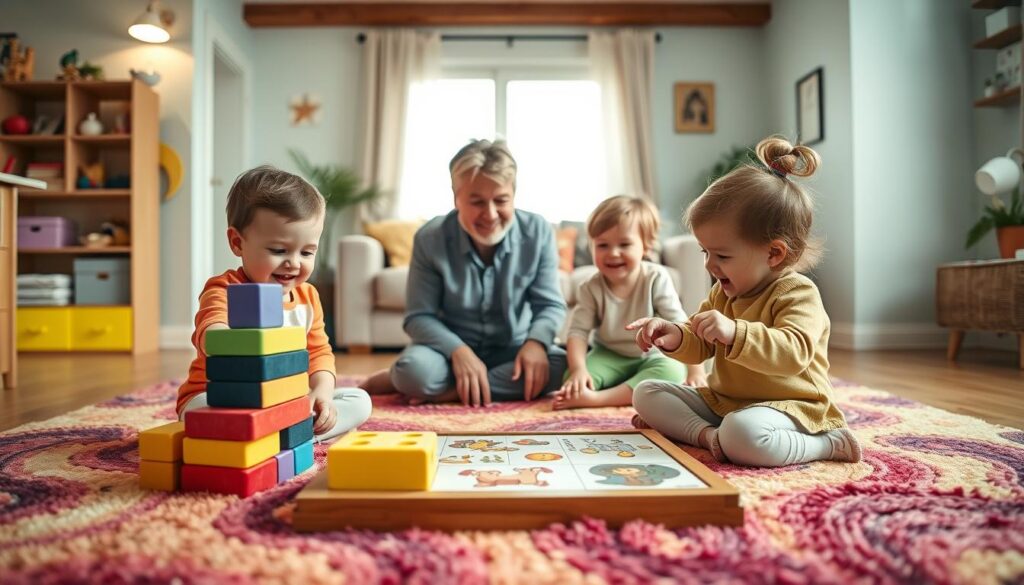
Some family games become great for young kids with a few changes. Sushi Go can be a simple picture match game. Ticket to Ride turns into a map-and-match activity with colored cards. Dixit becomes a storytelling circle without points.
Use fewer pieces and make steps easy to see. Use picture cards for word games and accept sounds for answers. Make games team-based, like building a route together instead of racing.
Adults can handle the hard parts. In Monopoly or Monopoly Deal, use play money for counting. An adult can manage money and special actions, letting kids focus on matching and taking turns.
Some games are better for older kids. Karuba, Kingdomino, the Exit series, and Charterstone need planning and reading. Wait until kids are 8–10 unless you simplify them for younger kids.
Adapting games? Shorten rounds, remove hidden info, and use fewer pieces. Replace hard rules with simple steps. Teach one rule at a time and celebrate small wins. This builds confidence and keeps kids interested in family games.
| Original Game | Preschool Adaptation | Learning Focus |
|---|---|---|
| Sushi Go | One-round picture draft with visual scoring cards | Matching, decision-making, turn-taking |
| Ticket to Ride | Map-and-match routes using colored cards; cooperative route building | Colors, counting, spatial reasoning |
| Dixit | Picture-prompt storytelling circle without points | Language, imagination, oral vocabulary |
| Monopoly / Monopoly Deal | Play-money counting practice; adult manages trades | Counting, money sense, following turns |
| Jenga | Large blocks or stacking cups; cooperative stacking challenge | Fine motor skills, patience, problem solving |
| Karuba / Kingdomino | Postpone or transform into sensory map activity | When ready: planning and pattern recognition |
Setting up play: rules, routines, and parental role
Before starting a game with your child, create a calm and clear atmosphere. A simple welcome, showing the pieces, and one easy instruction help them focus. This makes playtime predictable and safe for preschoolers.
Introducing rules clearly and positively
Teach one rule at a time. Use positive words like “we take turns” and show a sample turn. This helps kids understand the rules for toddler games.
Role-playing is a great way to practice with no pressure. Praise specific actions, like handing a card or waiting quietly for a turn.
Establishing routines and clean-up expectations
Make a consistent routine for game time: gather pieces, explain a rule, play a short round, and then clean up together. Use small containers to make cleaning up easier.
Turn cleanup into a fun challenge—beat the timer or sing a cleanup song. This makes it enjoyable and part of the play cycle.
How you can scaffold play for success
Start by helping: prompt choices, summarize moves, and offer hints during play. Gradually reduce your help as your child gets better at each skill.
Lower the stakes for mistakes while they learn, then raise small goals to build confidence. Pair simple praise with short, achievable tasks to encourage repeated success.
When you scaffold educational games for preschoolers this way, they gain independence and a positive view of rules for toddler games.
Use your role to guide transitions and model respectful play. Consistent routines support focus, and clear rules help children enjoy first games with rules kids ages 3 to 5 while learning social and cognitive skills.
Recommended starter games list and shopping tips
Start with a few good games for guided play with your child. Look for games that teach simple rules and keep play short. They should also let kids repeat the same play pattern. Here are some practical picks for first rule-based play and family fun.
Curated game suggestions for ages 3 to 5
- Zingo — builds word recognition with matching tiles; great for pre-readers and short turns.
- Tiny Polka Dot — focuses on counting and simple logic; rules stay easy so kids learn sequencing.
- Sequence for Kids — introduces planning and matching with child-friendly mechanics that simplify strategy.
- Fish n’ Flip (cooperative rescue theme) — encourages teamwork and basic decision-making in short rounds.
- Rory’s Story Cubes or create-a-story card sets — prompt oral language, imagination, and turn-taking.
- Fuzzy stacking sets or large-block stacking games — build fine motor skills and patience while practicing taking turns.
- Simple counting adaptations of Yahtzee or Shut the Box — use oversized dice and counters for hands-on number play.
- Professor Noggin’s card decks and Tree Bingo — short science-themed rounds for curiosity and facts.
Buying and storage advice
When shopping, look for durable pieces and clear age labels. Read reviews to ensure the game is durable for repeated play.
Choose games with quick setup and easy reset, like compact card packs or magnetic travel sets. These make it easy to start an activity on busy days and keep rules consistent.
Use clear bins or labeled boxes for easy access to pieces. Vertical shelving saves space in small homes. Magnetic trays or zip pouches keep small parts together when traveling.
Be mindful of choking hazards and choose preschool editions when available. Consider secondhand shops for classics like Sequence for Kids at lower cost. Pick items that can grow in complexity to keep siblings of different ages engaged.
These games are great for starting a learning habit. They fit well into routines where toddlers can easily learn.
Conclusion
Starting with simple games helps your child grow in many ways. These games improve thinking, social skills, and physical abilities. They make learning fun and engaging.
Choose a few games from the list and make them a regular part of your routine. Keep the games short and adjust the rules to fit your child’s pace. Use toys that are big and safe.
Make game time educational by focusing on counting, vocabulary, and solving problems. This way, learning becomes a fun experience for preschoolers.
Use toys that are easy to clean up and don’t need much setup. When your child is ready, introduce more complex games. Always encourage and keep the rules clear.
For more ideas on building and exploration games, check out this resource on building games by age.
Remember to keep things safe, sessions short, and focus on teamwork. These activities will help your child develop patience and curiosity. Enjoy these moments together, making learning fun and educational.