Have you ever wondered why a simple game of tag or Snakes and Ladders can teach a child fairness more than a lecture ever could?
Games with rules for kids are a special part of play, as found by researchers like Sara Smilansky. These games are alongside other types of play. They show how kids learn to agree, take turns, and handle winning or losing.
When you introduce these games at home or in school, you help your child. They learn planning, self-control, and how to think socially. The American Academy of Pediatrics says these skills are key for school and emotional health.
Structured play and guided activities, like educational games, also help with physical activity. They meet CDC goals and help balance screen time and sleep. For simple, backed-by-research strategies and examples, check out the Playful Kids about page.
Key Takeaways
- Games with rules for kids help teach turn-taking, fairness, and emotional control.
- Kids games with guidelines bridge play and learning, improving planning and language.
- Fun games for kids with instructions can be cooperative or competitive to fit developmental needs.
- Children’s games with regulations should be scaffolded from simple to complex as skills grow.
- Educational games with rules for children support physical, cognitive, and social-emotional development.
Explore the Main Benefits of Games With Rules for Kids
Games with rules can support many parts of a child’s development, from social skills and emotional control to patience, fairness, problem-solving, and age-appropriate play. These related guides go deeper into each important area.
- Social Skills for Kids: How Play Teaches Turn-Taking and Sharing
- How to Help Kids Handle Losing, Winning, and Big Emotions
- How to Help Kids Who Struggle With Patience and Self-Control
- How to Teach Kids to Play Fair and Respect Rules
- Best Logic and Strategy Games for Kids That Build Problem-Solving Skills
- Best Games With Rules for Kids by Age: A Parent’s Guide
- Best Games With Rules for Kids at Home, School, and Camp
What are games with rules for kids
As kids grow, they move from simple play to more structured games. These games have rules that outline goals, turns, and allowed actions. These rules can be written down or agreed upon by players.
Definition and distinguishing features
At their core, kids games with guidelines impose explicit or mutual limits that shape play. They describe who goes next, what counts as success, and how disputes get settled. These structures teach fairness, ownership, and how to handle cheating in a low-stakes setting.
Examples range from structured board games to situational playground norms. The clarity of rules makes expectations visible and creates predictable social interactions you can observe and support.
Where they sit in developmental play types
Developmental models place rule-based activity after functional, constructive, and dramatic play. You will notice that children often move from solo exploration to shared rule-following as language and self-control improve.
Many rule-based activities live in guided or semi-structured play, where adults scaffold complexity or let kids tweak rules. This stage supports executive functions like impulse control and sequencing.
Examples you recognize
Familiar children’s games with regulations include hide-and-seek, hopscotch, and basic board games such as checkers. Simple classroom activities like Simon Says and outdoor favorites like Red Light, Green Light teach listening and turn-taking.
Outdoor versions and activity lists offer clear instructions and learning goals. For practical inspiration, check the list of outdoor games for active preschoolers at best outdoor games for active preschoolers, where each idea shows how rules guide movement and social skills.
Why games with rules matter for child development
Rule-based play helps children understand how to interact with others and themselves. By introducing games with simple rules, kids learn to wait, plan, and adapt to new situations. This approach adds structure to play while keeping it fun.
Social-emotional development
Playing games together teaches kids about turn-taking, sharing, and empathy. In these games, children face and solve conflicts. They learn to negotiate, apologize, and support their friends.
This practice builds resilience. When kids lose, they learn to handle disappointment and try again. Cooperative games also help kids make stronger friendships by reducing conflict.
Cognitive and executive function benefits
Structured play improves planning, working memory, and self-control. Educational games require remembering steps and strategies. Kids learn to pause and think before acting, which strengthens self-control.
Strategic games help kids move beyond self-centered thinking. To win, they must predict opponents’ moves and adjust their strategies. These skills help with following directions and solving problems in school.
Language, moral reasoning, and perspective-taking
Games encourage discussions about rules and fairness. Fun games with instructions help kids talk about consequences and make changes. These conversations improve their vocabulary and communication skills.
When kids argue over rules, they practice seeing things from different perspectives. They learn to consider others’ intentions and decide what’s fair. This process helps them manage their emotions and make better social choices.
| Developmental Area | How Rule-Based Games Help | Example Activity |
|---|---|---|
| Social-emotional | Teaches sharing, turn-taking, empathy, and coping with loss | Cooperative board game where teams win together |
| Executive function | Builds planning, working memory, inhibitory control, and flexibility | Sequence card games that require remembering and adapting rules |
| Language & moral reasoning | Promotes negotiation, rule discussion, and perspective-taking | Role-play games with assigned roles and consequences |
| Academic readiness | Supports math vocabulary, counting, and following instructions | Instruction-based counting games and timed challenges |
Types of kids games with guidelines across ages
Choosing the right game format is key. Games for kids change as they grow. They help match activities to abilities and goals like cooperation and self-control.
Games for infants and toddlers
Play for young ones is about routines that teach predictability. Simple games like peek-a-boo and pat-a-cake are great. They help with object permanence, vocal turn-taking, and sensory learning.
Use short, repeatable actions and gestures. Introduce turn-taking gently. Expect gradual progress, not perfect rule-following.
Preschool games with simple rules
Preschoolers can handle short, explicit rules. Games like Simon Says and simple matching or movement activities work well. These games improve listening skills and impulse control.
Choose cooperative games when siblings or peers differ in age. Use clear cues, visual prompts, or a timer to help children understand expectations.
School-age rule-based games
Older children can manage layered rules and strategy. Introduce team sports, turn-based board games, and role assignments. These activities teach planning and fair play.
Balance competition with collaboration. Encourage reflection on outcomes. Coach children through losses to reduce stress from rivalry.
| Age Range | Typical Rule Features | Good Examples | Parent/Caregiver Tips |
|---|---|---|---|
| Birth–12 months | Short, predictable routines; sensory focus | Peek-a-boo, vocal turn-taking | Keep sessions brief; use face-to-face interaction and touch |
| 1–3 years | Simple, repeated actions; supervised role play | Pat-a-cake, basic hide-and-seek, imitation games | Model taking turns and label emotions; expect egocentric play |
| 3–5 years | Clear single-step rules; cooperative play starts | Simon Says, simple board games, group movement games | Use visuals and timers; introduce cooperative goals |
| 6–9 years | Multi-step rules, strategy, team roles | Team sports, strategy board games, relay races | Teach rule negotiation and sportsmanship; scaffold complexity |
| 10+ years | Complex rule systems, competitive and cooperative balance | Structured tournaments, role-playing games, advanced strategy games | Monitor stress from competition; promote reflection and teamwork |
Educational games with rules for children
Rule-based play is great for teaching school skills in fun ways. Educational games for kids require them to follow steps and use their knowledge. This helps improve math, vocabulary, logic, and planning skills, all while having fun.
How structured games teach academic skills
Structured games make learning concrete. When kids count, match words, or sort items, they practice important skills. These games also teach them to follow rules and understand cause-and-effect.
Choose games that match your learning goals. A counting race, bingo, or logic puzzles can target specific skills. Games like Peaceable Kingdom’s Race to the Treasure also help with social skills.
Guided play vs. free play balance
Guided play helps kids learn to follow directions and achieve goals. Games with instructions prepare them for classroom readiness. Free play, on the other hand, encourages creativity and problem-solving.
Start with a guided round to teach rules, then let kids create their own games. This balance keeps learning fun and lets kids stay independent.
Selecting age-appropriate educational games
Choose games that fit your child’s age and skill level. Preschoolers need simple games with clear rules. Early elementary kids can handle more complex rules. Older kids can enjoy games with strategy and multi-step challenges.
Look for games that promote social interaction and have low screen time. Make sure they have features like hint cards or leveled play. The best games are those that adapt to your child’s needs and celebrate their progress.
Benefits of cooperative and non-competitive rule games
Cooperative games offer a safe space for kids to learn without fear of losing. They encourage teamwork and reduce quitting when one child wins too much. Games like those from Peaceable Kingdom focus on working together, making sure everyone feels included.
These games help kids develop important social skills. They learn to communicate, take turns, and lead. They also practice following directions and finding solutions together.
Cooperative games teach kids to handle setbacks better. They learn to keep trying without feeling defeated. This way, kids stay engaged and don’t give up easily.
Creating an inclusive play environment is key. Games that are friendly to different senses and accessible to all help everyone join in. This makes playtime a safe and supportive space for all.
Start with simple rules and add more as kids get better. This keeps games fair and lets everyone contribute. These habits help kids grow emotionally and socially.
How to introduce games with rules at home
Begin with short, clear play sessions. This helps kids learn without feeling too much. Offer games that focus on working together and taking turns. Simple games help you show what it means to play fairly.
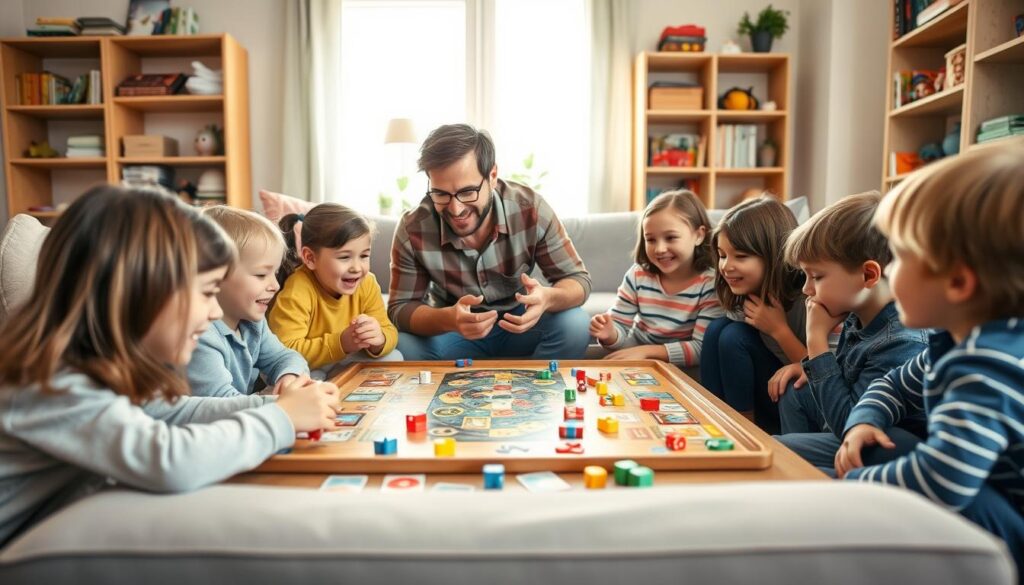
Start simple and scaffold complexity
Start with one rule at a time. Use games like Simon Says or tag to teach listening and control. As your child gets better, add more steps or scoring.
Start with games that don’t feel competitive, like Race to the Treasure. You can find more ideas at games with rules. These help kids move from free play to games with rules.
Strategies for enforcing rules and handling rule-breaking
Set clear expectations before playing. Use consequences that fit the child’s age, like pausing the game. Always praise kids for trying to follow the rules.
If a child breaks a rule, calmly remind them of it. Let kids talk about fair solutions. For young kids, gentle reminders work better than strict rules.
Use of routines and play invitations
Set regular times for structured play. This helps kids see that rules are part of routines. Use simple invitations to play, like “Let’s build a track and take turns.”
Balance structured play with free play to keep creativity alive. When you play, follow the rules and let kids suggest small changes. This helps them learn to negotiate and make decisions.
- Tip: Mix short, active games to meet daily movement needs and teach teamwork.
- Tip: Use simple cue-cards for rules so kids who can’t read can follow along.
- Tip: Keep a small shelf of games for different ages. This helps kids learn in small steps.
Introduce games with rules in a calm and brief way. Teaching rules in small steps helps kids learn fairness, strategy, and empathy. These skills help turn play into learning.
How to introduce games with rules at school and in groups
You can introduce games with rules in classrooms with a few steps. Start by picking activities that fit the kids’ ages. Choose games that everyone can play together, like cooperative ones.
Give short demos and simple rules before starting. This helps kids know what to do.
Teacher and caregiver roles
As a teacher, you should show kids how to follow rules and play fairly. Use positive words to explain what’s expected. If needed, help with turns and explain things clearly.
Let kids help make some classroom rules. This makes them feel more involved and helps them learn to negotiate. If someone breaks a rule, show them how it affects everyone. Keep your responses short and clear.
Group-size and classroom management tips
Choose the right group size for each game. Use small groups for games that need careful turns and bigger circles for active games. Let kids take turns being leaders and helpers.
Have stations with rules written down for easy access. For groups with different skills, pair kids wisely. Keep things moving by using consistent signals.
Using games to meet learning objectives
Plan games that help with reading, math, or social skills. Use games to practice reading and math. This makes learning fun and engaging.
Make sure games include physical activity and help with social skills. This follows the American Academy of Pediatrics’ advice. Also, offer extra help for kids who need it, so everyone can have fun.
Common challenges and how to overcome them
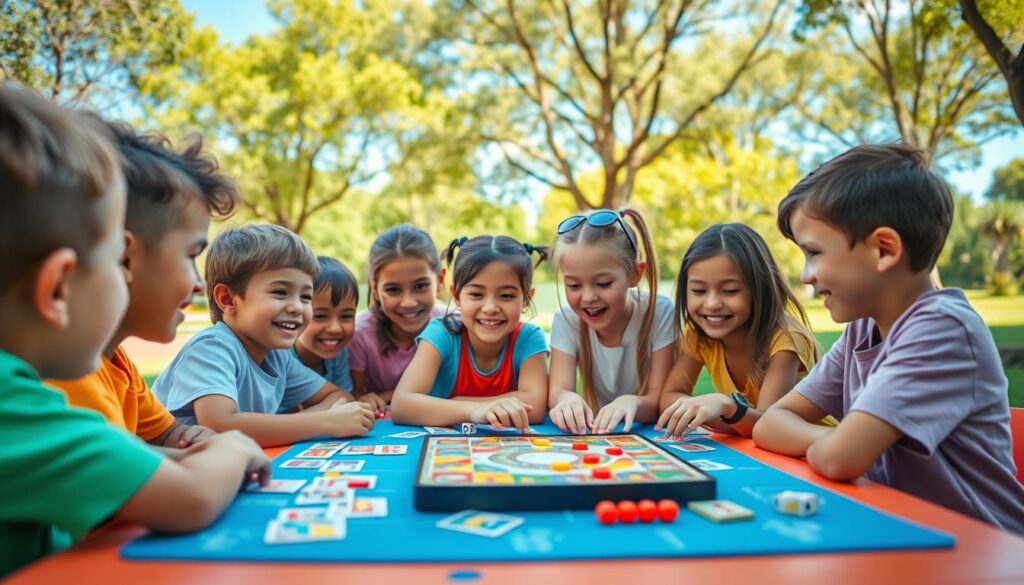
Introducing rules to play can be tricky. Young kids often test limits and may cheat. To avoid this, choose games that everyone can win together. Also, teach them what happens if they break the rules.
Dealing with cheating, tantrums, and early egocentrism
Stay calm when a child gets upset. Break games into easy steps so they see progress. Praise their effort, not just their wins.
Teach kids what cheating is and why rules matter. Use visual aids to teach turn-taking. After fights, offer a chance to start again to keep play fun.
Mismatched skill levels among players
Games often have kids of different skills. Give everyone a role to help achieve the goal. Use team play or add special rules to help weaker players.
Make games where everyone can contribute in their own way. For example, one can plan, another build, and a third test. This makes everyone feel important and helps them learn.
Limited attention or frustration tolerance
Play short, active games to keep kids focused. Mix in different activities to keep things interesting. Follow CDC guidelines for daily activity and play in short sessions.
If a game doesn’t work, see it as a chance to learn. Encourage kids to try again and adapt the game. This keeps them interested and curious.
For more ideas on creating simple games, check out building games for children. You can customize these ideas for your group.
| Challenge | Quick fix | When to use |
|---|---|---|
| Cheating or ignoring rules | Use cooperative goals and clear, short rules | Small groups, siblings close in age |
| Tantrums and strong emotions | Pause, model calm, offer a short reset | Before transitions or after stress |
| Skill mismatches | Assign complementary roles and handicaps | Mixed-ability groups or classrooms |
| Low attention span | Short sessions, active rules, alternate play types | Preschoolers and early elementary |
| Sensory or developmental needs | Adapt materials, simplify steps, use visual supports | Inclusive play settings |
Clear routines and chances to win help overcome challenges. Use cooperative games and instructions that kids can follow. This makes playtime fun and inclusive for everyone.
Suggested games and activities by age and objective
Choose activities that match your child’s attention, motor skills, and social stage. Below are practical picks you can try at home, in preschool, or with older children. They help build rule-following, cooperation, and strategy.
Birth to three suggested rule-like activities
For infants, focus on predictable routines that feel like rules. Try vocal turn-taking, peek-a-boo, and simple sensory games. These games repeat actions so babies learn cause and effect.
At 7–12 months, encourage object permanence with hiding-and-seek play and short, supervised crawling courses. For toddlers, introduce gentle commands with stacking, sorting, and a simplified Simon Says. This practice listening.
Preschool and early elementary picks for rules practice
Start with short, structured games that teach taking turns. Try hopscotch, red light/green light, and cooperative board games like Hoot Owl Hoot. These games practice shared goals.
Use matching card games and easy beginner board games to teach counting, patience, and following written or verbal instructions. These games guide play without heavy competition.
Older children and strategy game recommendations
Choose games that deepen planning and perspective-taking. Team sports teach rules in motion. Classic board games such as chess and Settlers of Catan build strategy and rule negotiation.
Introduce cooperative problem-solving games and complex card games. These games strengthen organization, turn sequencing, and social reasoning. They support executive function and long-term thinking.
| Age Range | Recommended Activities | Main Skill Targeted |
|---|---|---|
| 0–6 months | Vocal turn-taking, peek-a-boo, gentle sensory routines | Attachment, cause-effect, early communication |
| 7–12 months | Object permanence play, safe crawling courses, interactive rattles | Spatial awareness, attention, motor planning |
| 1–3 years | Stacking and sorting games, simplified Simon Says, role-play with props | Listening, following simple instructions, turn-taking |
| Preschool–Early Elementary | Hopscotch, red light/green light, cooperative board games, matching cards | Rule-following, cooperation, basic counting and memory |
| School-age/Older Children | Team sports, chess, Settlers of Catan, strategic card games | Planning, social reasoning, advanced strategy |
When you pick games with rules for kids, balance challenge with success. Use fun games for kids with instructions to model how rules work. Mix in educational games with rules for children to meet learning goals and keep play engaging.
Practical resources and tools to get started
You can build a toolkit that supports play, skill growth, and easy rule-following. Start with a few trusted publishers and simple classroom supports. Small additions to your home or classroom change how children respond to structure and play.
Recommended publishers and game lists
Look for cooperative titles from Peaceable Kingdom, such as Race to the Treasure, which ease kids into shared goals and rule practice. Select publishers with clear age guidance and accessible rulebooks so you can teach step by step. Include a mix of board games, movement games, and sensory activities to cover different needs.
Apps, printable rule-sheets, and classroom supports
Use printable rule-sheets and visual rule cards to help children remember steps and expectations. Timers, stickers, and simple reward charts provide consistent feedback without overemphasis on winning. Choose apps that encourage caregiver-child interaction. For physical-play ideas and props to boost balance and motor skills, consult a practical guide like physical play ideas to boost gross motor.
How pediatric guidance supports play
Pediatricians and the American Academy of Pediatrics promote play as part of healthy development. Your pediatrician can offer age-based play suggestions, a “prescription for play,” and simple toy lists—blocks, puzzles, and shape sorters—that pair well with rule-based activities. Use those recommendations to choose educational games with rules for children that match developmental milestones.
| Resource | Best for | How it supports rule learning |
|---|---|---|
| Peaceable Kingdom cooperative games | Young children, group play | Promotes shared goals, reduces competition, models taking turns |
| Playworld playground equipment | Inclusive outdoor play | Provides sensory-rich setups for safe rule-driven games and obstacle courses |
| Printable rule cards and timers | Classrooms, homes | Visual cues aid recall, support transitions, and scaffold complexity |
| Caregiver-shared interactive apps | Screen-based guided play | Encourages joint attention and models rule-following during play |
| AAP play guidance and age-specific guides | Parents and pediatricians | Aligns play choices with development and recommends family media plans |
When you combine accessible games with clear supports, children’s games with regulations become tools for growth. Gradual increases in complexity help you introduce games with rules for kids without overwhelm. Pair those activities with educational games with rules for children to reinforce academic and social learning in everyday routines.
Conclusion
Games with rules can help kids move from free play to structured thinking. These games show how kids start to think about right and wrong. They also help kids learn to plan, take turns, and control themselves.
Start with games that everyone can play together. This helps kids learn to share and win graciously. It also teaches them how to handle losing.
It’s important to balance structured games with free play. This mix helps kids practice language, math, and managing their feelings. The American Academy of Pediatrics and trusted publishers can guide you in choosing the right games.
Make games with rules a regular part of your child’s day. Use simple rules and clear instructions. This way, you can help your child grow while keeping play fun.