
Have you ever watched your child discover the joy of creating? It’s a magical moment when they pick up blocks and let their imagination run wild. But as they grow, their interests shift. What captivates a toddler may not hold the attention of a preschooler.
As a parent, I understand the struggle. Many of us buy toys on impulse, only to find our kids lose interest quickly. That’s why I’ve crafted this comprehensive guide to help you navigate the exciting world of building activities for your child.
Understanding which games suit your child’s age is crucial. Each activity can support their development and creativity. Whether they are stacking their first block or engaging in more complex projects, this guide will help you choose wisely.
I believe every child is a natural builder. With the right tools and guidance, you can transform simple play into valuable learning experiences.
Key Takeaways
- Choosing the right games for your child’s age enhances their learning experience.
- Engaging activities support creativity and problem-solving skills.
- Every child has the potential to be a builder with the right guidance.
- Understanding your child’s interests helps you select the best toys.
- Shared playtime can strengthen your bond and encourage teamwork.
Introduction: My Journey into Building Games and Child Development
Witnessing my child’s imagination come to life is truly a remarkable experience. My journey began when I realized that over 10 million parents trust platforms like Keiki to provide meaningful educational experiences for their children. This insight inspired me to explore the world of hands-on play.
Hands-on play is a fundamental need for kids. I have seen how stacking blocks helps a child understand the physical world around them. When a child uses their hands to create, they are not just playing; they are developing the creativity needed for future success.
Building games are more than simple entertainment. They allow a child to turn their ideas into reality. By observing my own child, I discovered that these activities spark a unique form of creativity that traditional toys often fail to ignite.
| Aspect | Importance | Impact on Child |
|---|---|---|
| Hands-On Play | Essential for development | Enhances understanding of the world |
| Creativity | Fosters innovative thinking | Encourages problem-solving skills |
| Engagement | Increases focus | Promotes deeper learning |
The Benefits of Building Games for Child Development
Seeing how my child interacts with different materials during playtime is a true delight. Engaging in creative activities is not just fun; it plays a vital role in their development. These activities help kids plan, create, and solve problems using both their hands and minds.
For instance, manipulating small construction pieces can significantly improve fine motor skills. These skills are essential as they prepare a child for writing later on. Additionally, moving larger objects, like pillows or boxes, strengthens gross motor skills necessary for physical coordination.
As children learn that a tower must be balanced to stay upright, they naturally develop strong problem-solving skills. Each time they build, they train their brains to think logically, which is a core component of healthy cognitive development.
| Skill Type | Activity | Developmental Benefit |
|---|---|---|
| Fine Motor Skills | Manipulating small pieces | Improves dexterity for writing |
| Gross Motor Skills | Moving large objects | Enhances physical coordination |
| Problem-Solving Skills | Balancing structures | Encourages logical thinking |
How Building Games Change with Age
Watching my child explore their world through play is an eye-opening experience. The way children engage with construction materials shifts significantly as they grow. Understanding these changes helps me provide the right activities that match their development.
Sensory Exploration for 1-2 Year Olds
For toddlers aged 1-2 years, building games are primarily sensory experiences. They love the excitement of dumping blocks from a box. This chaotic play is essential for their sensory development.
Purposeful Construction in Early Childhood
As children reach 3-5 years, they transition to purposeful construction. They start creating recognizable structures, like garages for their toy cars. This stage fosters creativity and problem-solving skills.
Emerging Engineering Concepts for Older Kids
When kids reach 6 years and older, they begin to grasp complex engineering concepts. They learn to build bridges that require stable supports. This progression showcases their growing understanding of balance and structure.
By observing these distinct developmental stages, I can choose the most suitable building games for my child. Understanding these shifts is key to nurturing their creativity and skills.
| Age Group | Focus of Play | Key Activities |
|---|---|---|
| 1-2 Years | Sensory Exploration | Dumping blocks, stacking |
| 3-5 Years | Purposeful Construction | Building houses, roads |
| 6+ Years | Engineering Concepts | Constructing bridges |
For more insights on suitable activities, check out this comprehensive guide.
DIY Building Games at Home with Everyday Materials
Creating fun structures at home can ignite your child’s imagination. Using simple materials around the house can lead to endless creativity for kids. Everyday items like pillows, boxes, and blankets can be transformed into fantastic play experiences.
For instance, I love using pillows and blankets to help my child build a cozy fortress in the living room. A simple cardboard box can be transformed into a robot or a city, proving that you do not need expensive toys. When a child uses a box to build, they are practicing spatial reasoning and creative thinking in a very accessible way.
I also encourage my child to use chairs and blankets to create a tunnel. This activity is a fantastic way to develop gross motor skills. These DIY building games are perfect for any child because they turn the home into a giant, creative sandbox for exploration.
| Material | Creative Use | Developmental Benefit |
|---|---|---|
| Pillows | Fortress building | Encourages imaginative play |
| Cardboard Boxes | Robot or city creation | Enhances spatial reasoning |
| Chairs and Blankets | Tunnel construction | Develops gross motor skills |
Creative Building Games with Natural Materials
Engaging with the natural world can spark a child’s creativity in surprising ways. When kids use stones and sand, they are not just playing; they are learning vital skills. These materials offer unique challenges that enhance their development.
Taking my child outside to build stone towers is a wonderful way to connect with nature while training balance. I have found that creating sandcastles in a sandbox is one of the best games for a child to develop tactile sensations. When a child builds a house for bugs using sticks and leaves, they learn to care for the environment.
These natural building games allow kids to experiment with uneven surfaces, presenting challenges that plastic blocks do not. I always encourage my child to find creative solutions when the materials they choose do not fit together perfectly.
| Material | Activity | Developmental Benefit |
|---|---|---|
| Stones | Building towers | Trains balance and fine motor skills |
| Sand | Creating sandcastles | Develops tactile sensations and imagination |
| Sticks and Leaves | Building bug houses | Fosters care for the natural world |
Building Games and Their Impact on STEM Skills
Every time my child engages in construction play, I see their cognitive skills flourish. These activities are not just fun; they play a crucial role in developing essential STEM skills.
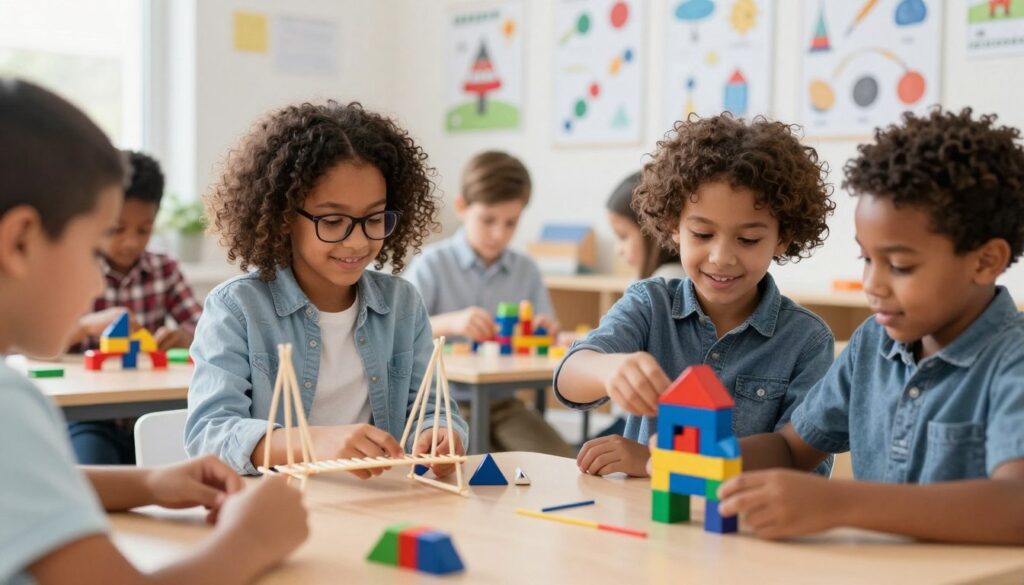
Building games are a powerful tool for teaching a child about geometry as they learn to see space in three dimensions. I have noticed that when my child plans a structure, they are actively developing the logical planning skills needed for future success in science, technology, engineering, and math.
Persistence is another key lesson. When a tower falls, my child learns to try again and solve the problem. These activities help a child understand how different shapes connect, laying the foundation for advanced mathematical and architectural skills.
By focusing on building, a child gains the patience required to complete complex projects that require multiple steps and careful thought.
| Skill Type | Building Activity | Developmental Benefit |
|---|---|---|
| Spatial Reasoning | Constructing structures | Teaches geometry and space awareness |
| Logical Planning | Designing a project | Enhances critical thinking skills |
| Persistence | Rebuilding after failure | Fosters resilience and problem-solving |
Building Games by Age
The way my child engages with building tasks reflects their developmental journey. As they grow, the activities they enjoy become more complex and rewarding. I have curated these building games to ensure that every child receives tasks that match their specific development stage.
For younger kids, I recommend sensory-focused activities that emphasize the simple joy of stacking and knocking down blocks. These playful interactions lay the groundwork for future skills. As a child grows, I suggest introducing engineering tasks that require them to follow specific steps to achieve a stable result.
It is important to choose games that challenge a child just enough to keep them engaged without causing unnecessary frustration. By matching the activity to the age of the child, I can ensure that they are always learning and having fun simultaneously.
- Curated games promote age-appropriate learning.
- Sensory tasks foster early engagement and joy.
- Engineering challenges build critical thinking skills.
- Activities should be challenging yet achievable.
- Matching games to age enhances learning and fun.
Harnessing Digital Tools: Apps and Online Building Games
Exploring the world of apps can open new avenues for your child’s imagination. Many digital tools today provide fantastic opportunities for kids to engage in creative play. Among these, Minecraft stands out as one of the best building games for kids. Released in 2011, it offers a vast 3D world where children can create anything they can dream up.
Another exciting option is Toca Builders, which features six unique robots like Jum-Jum and Vex. These characters help kids design their own worlds, making it both fun and educational. Additionally, Block Craft has gained popularity, with over 100 million downloads, allowing children to build everything from jetfighters to cozy homes.
For a more structured challenge, I enjoy using Cyberchase 3D Builder. This app offers eight levels of increasing difficulty, encouraging my child to rebuild a city in 3D. Integrating screen time with learning is easy when I choose high-quality apps that promote creativity and problem-solving.
| App/Game | Features | Benefits |
|---|---|---|
| Minecraft | Vast 3D world | Encourages creativity and exploration |
| Toca Builders | Six unique robots | Fosters imaginative design |
| Block Craft | 100+ million downloads | Promotes building skills |
| Cyberchase 3D Builder | 8 levels of challenges | Enhances problem-solving abilities |
Enhancing Creativity and Spatial Awareness Through Play
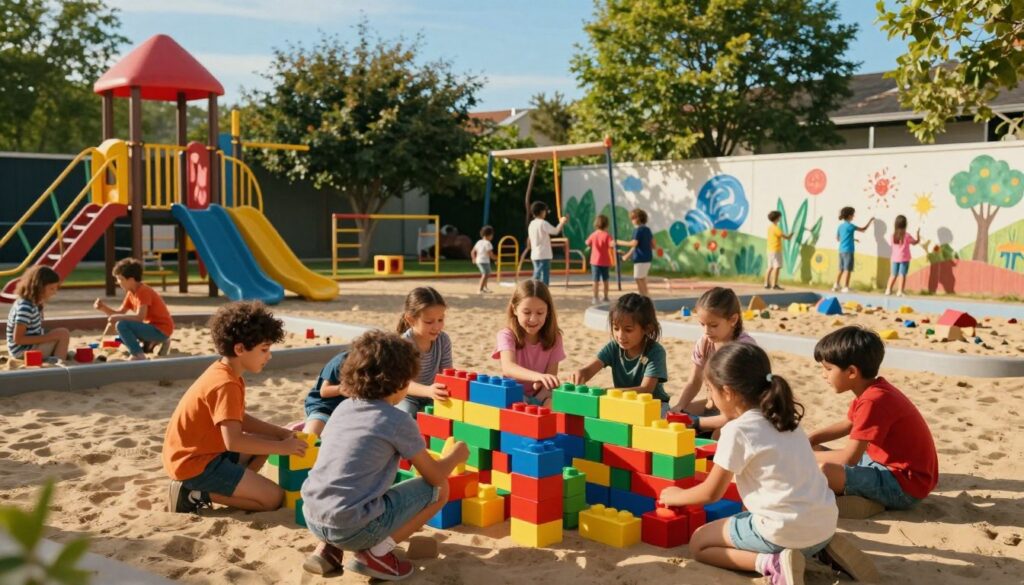
The creativity that emerges when my child plays with blocks is nothing short of magical. I believe that these activities are the most effective way for a child to enhance their spatial awareness and creative thinking.
When a child builds, they are creating unique worlds that exist only in their imagination, which is a vital part of development. My child often surprises me with the complex creations they build using simple blocks and their growing understanding of space.
These games provide a safe environment for a child to experiment with different shapes and designs without any fear of failure. By focusing on creativity, I help my child develop the confidence to tackle any building challenge they might encounter in the future.
How Parents Can Support Building Play at Home
Supporting my child’s creativity during playtime is a rewarding experience. As parents, we can enhance their building adventures by fostering exploration and independent thinking.
One effective way to do this is by asking open-ended questions. Instead of giving direct instructions, I encourage my child to think critically about their creations. This approach nurtures their problem-solving skills.
Creating a dedicated building corner in our home has also proven beneficial. This space allows my child to store their favorite tools and materials, making it easy for them to access their creative resources.
I always motivate my child to experiment with their blocks. This exploration helps them develop a unique style and approach to building.
It’s equally important for parents to engage in play alongside their child. By participating without taking over, I allow my child to be the main architect of their imaginative worlds.
Finally, providing a variety of materials ensures my child has the right tools to bring their ideas to life. For more ideas on engaging activities, check out this resource on social skills for children.
Engaging Building Challenges and Competitions
Encouraging my child to take on building challenges has proven to be an exciting adventure. These activities not only spark creativity but also teach valuable lessons about stability and patience.
Constructing the Tallest Tower
I love organizing a competition to see who can build the tallest tower. This fun challenge teaches my child about stability and the importance of patience. As they stack blocks higher, they learn to focus on balance, making each addition carefully.
City Building and Creative Contests
City building challenges allow my child to design roads and parks, which is a fantastic goal for developing long-term planning skills. I have seen my child develop incredible focus when tasked with building a city that must include houses and bridges.
These friendly contests are a fun way for a child to practice their skills while working toward a specific, exciting goal. Competitions show them that building is a process requiring both effort and a clear vision.
Exploring Construction Projects for Real-World Skills
Engaging my child in construction projects opens their eyes to the world of creativity. These hands-on DIY challenges help kids connect their play to essential real-world skills. I find that these projects demonstrate how the principles of construction apply to the buildings they see every day.
Through these activities, my child learns that construction is a practical skill used to solve problems. I believe that linking play to everyday learning is the best way to prepare a child for future challenges. Every project we complete together reinforces the idea that with enough effort, a child can build anything they can imagine.
- Hands-on projects connect play to real-world skills.
- Children learn construction principles relevant to their environment.
- These activities cultivate problem-solving abilities.
- Linking play to learning prepares kids for future challenges.
- Every project reinforces the power of imagination and effort.
Tips for Balancing Screen Time with Active Play
Finding the right mix of digital play and physical activity can greatly enhance my child’s learning experience. I always set clear time limits for digital building games to ensure my child maintains a healthy balance with active play.
It is important to treat screen time as a tool for learning rather than just a way to pass the time. I encourage my child to take breaks from their digital creations to engage in physical activities that get them moving.
Balancing these two types of play helps a child develop both their digital literacy and their physical coordination at the same time. By being mindful of the time spent on screens, I can ensure that my child gets the most out of every learning opportunity.
Conclusion
Every moment spent watching my child create is a testament to their boundless imagination. Building activities are a powerful tool for children to develop essential skills like patience, creativity, and problem-solving. Whether your child is constructing a city with blocks or exploring digital worlds, these experiences provide rich learning opportunities.
I hope this guide helps parents choose the best activities that support their child’s development at every step. Remember, the goal is to foster a love for construction and exploration that will last for many years. By integrating these projects into your daily routine, you can help your child build a strong foundation for a successful future.