
A preschool child stacks colorful blocks, starting a tower. Each block is a new challenge and a chance for creativity. As they place each block, they learn about balance and stability. They see which blocks fit best.
This simple act of building brings joy and builds essential skills. It’s a key part of learning and growing.
Building games help preschoolers grow their minds. They get to explore and solve problems. It’s more than just play; it’s learning.
Children think creatively and test their ideas. They find ways to overcome challenges. This makes them more confident and skilled.
Building games also improve hand-eye coordination. Children use their hands to stack and arrange blocks. This strengthens their fine motor skills.
These skills are important for learning and doing things on their own. Building games are vital for a child’s development. They help with school and social skills.
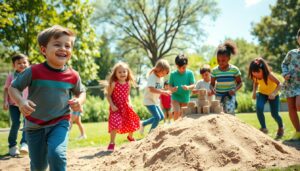
Key Takeaways
- Building games enhance creativity and problem-solving skills.
- Construction play benefits cognitive and physical development.
- Engaging in building activities fosters fine motor skills.
- Children learn to explore and understand their environment.
- Building games lay the groundwork for future academic success.
- Play is critical for holistic child development.
Understanding the Role of Building Games in Child Development
Building games are key for kids’ growth. They keep children active and help them learn important skills. Through building, kids improve their thinking, physical abilities, and emotional strength.
Building games boost creativity and problem-solving skills. This makes learning fun and effective.
How Building Activities Support Cognitive Growth
Block play is great for kids’ minds. It helps in many ways:
- Improved spatial awareness
- Enhanced logic and reasoning skills
- Introduction to early STEM concepts
These skills are vital for math and science learning later on.
Physical and Emotional Benefits of Construction Play
Construction play is good for kids’ bodies and minds. It helps with:
- Fine motor skills development
- Hand-eye coordination
It also teaches kids to handle frustration and be patient. They learn to be resilient in a safe space.
| Benefits | Cognitive Development | Physical Development | Emotional Development |
|---|---|---|---|
| Building Games | Spatial awareness, logic | Fine motor skills, coordination | Resilience, patience |
Benefits of Building Games for Enhancing Cognitive Flexibility
Building games offer kids a special chance to boost their cognitive flexibility. These games help them think outside the box and tackle problems from different sides. As they play, they gain skills that help them face life’s challenges.
Encouraging Creative Problem Solving Through Gameplay
Gameplay teaches kids to solve problems in creative ways. Building games create a space for kids to try new things and come up with fresh ideas. This kind of play helps them:
- Explore ideas without limits
- Adjust to new situations
- Work well with others
By building their own worlds, kids develop innovative thinking and learn to handle tough situations.
Developing Spatial Reasoning Skills with Construction Mechanics
Construction mechanics are key for kids’ brain growth. They learn how to put pieces together and how to balance structures. This is important for:
- Better spatial understanding
- Sharpening critical thinking
- Feeling a sense of accomplishment
Games like Minecraft show these benefits. They help kids improve their spatial skills and see their creations in 3D.
| Skill Developed | Building Games Impact |
|---|---|
| Cognitive Flexibility | Encourages creative thinking and adaptability |
| Problem Solving | Fosters innovative solutions through experimentation |
| Spatial Reasoning | Enhances understanding of space and structure |
Building Games and Fine Motor Skills Development
Building games are key for your child’s fine motor skills. They help kids handle small objects like blocks and tiles. This practice makes their hand muscles stronger and improves coordination.
Block building games teach kids to move their fingers and hands precisely. These games don’t just build strength. They also boost dexterity. As kids stack blocks or connect pieces, they learn skills for drawing and dressing themselves.
Here are some fine motor skills activities for your child’s playtime:
- Cutting with scissors
- Finger painting
- Using a paintbrush
- Pasting and gluing
- Playing with playdough
- Sculpting and drawing
- Playing with pegs and puzzles
- Building with Legos
These activities help your child improve their fine motor skills while having fun. For more info on fine motor skills and child development, check out this resource.
Social Skills and Emotional Regulation Gained from Construction Play
Building games are more than just fun. They help kids develop social skills and learn to manage their emotions. By working together on projects, kids have meaningful interactions. These experiences teach them important life skills that shape their future.
Collaboration and Communication During Group Building Activities
When kids work together on building activities, they learn key skills. They practice:
- Cooperation: Sharing tasks and responsibilities
- Communication: Expressing ideas and listening to others
- Turn-taking: Understanding the importance of patience
- Conflict resolution: Navigating disagreements constructively
These interactions boost problem solving skills for kids. They learn to work together, share, and manage their roles. This strengthens their social skills.
Managing Emotions and Building Resilience Through Game Challenges
Building games often come with challenges. For example, a tower might collapse. These setbacks teach kids to handle emotions like frustration and disappointment. It’s key for building resilience.
As they face challenges, kids develop a positive mindset and emotional control. In conclusion, construction play is great for social interaction and emotional growth. Kids learn to work together, communicate well, and build resilience. These skills are essential for their future relationships and emotional well-being.
Creative Building Gameplay Benefits for Imagination and Innovation
Creative building games unlock your child’s imagination and foster innovation. These games let kids explore freely, making unique structures and stories. They don’t have to follow strict rules, which helps them think creatively.
When kids play these games, they’re learning important skills. The benefits include:
- Enhanced problem-solving abilities
- Improved spatial awareness
- Boosted creativity and originality
- Increased confidence in expressing ideas
Through creative building, kids can:
- Experiment with different materials and designs
- Invent new scenarios and stories
- Collaborate with peers to enhance their projects
These activities help kids develop an innovative mindset. They learn to adapt their ideas, making changes and improvements. This trial and error process builds resilience and resourcefulness.
Encouraging creative building gameplay boosts imagination and prepares kids for the future. It lays the groundwork for lifelong learning and exploration.
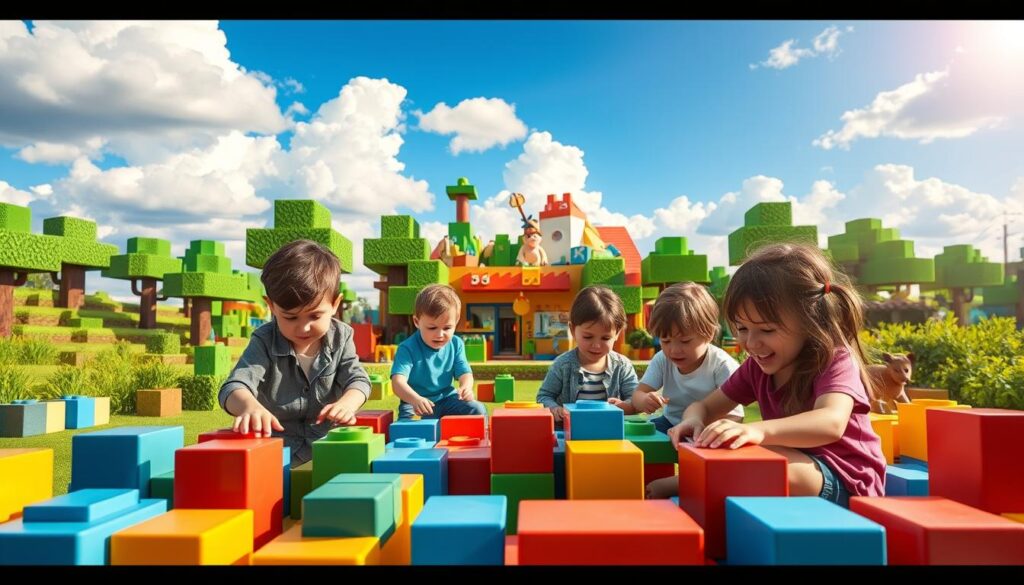
Integrating Minecraft Style Games Benefits into Early Learning
Minecraft-style games are great for young learners. They offer a space for kids to explore, create, and learn through play. These games let kids use their creativity and learn important concepts.
Encouraging Open-Ended Exploration and Self-Expression
Open-ended exploration is a big plus of Minecraft-style games. Kids can:
- Build structures using their imagination.
- Experiment with different materials and designs.
- Interact with virtual environments that respond to their actions.
This freedom helps kids express themselves and think creatively. They learn to make choices and see how their actions affect things. This boosts their decision-making skills.
STEM Concepts and Critical Thinking Fostered by Sandbox Games
These games are full of STEM concepts. Players deal with:
- Engineering principles when constructing buildings.
- Geometry as they plan their layouts.
- Physics when understanding movement and gravity.
The problem-solving in these games sharpens critical thinking. Kids face challenges that need planning and strategy. This improves their analytical skills. Adding Minecraft-style games to early learning makes education fun and effective.
The Educational Building Games and their Impact on Early Literacy and Math
Educational building games are key in helping kids learn early literacy and math. These fun activities give kids a solid base in important school subjects. They also help kids practice counting, spot patterns, and learn to sequence.
Building games do more than just improve math skills. They also boost language skills. Kids learn new words and get better at telling stories while they play. This mix of fun and learning helps kids grow smarter.
- Counting blocks reinforces number recognition.
- Recognizing patterns helps in understanding sequences.
- Storytelling during play enhances comprehension skills.
These games offer a complete way to learn. They make learning fun and interactive. This way, kids are ready for school challenges ahead.
Construction Simulation Educational Value in Early Childhood
Building games are a great way to improve early childhood education. They mix virtual and physical tools to make learning fun. This way, every child can learn in a way that suits them best.
Using different tools helps kids learn better. They do best when they can use more than one sense. Here are some key points about the benefits of using virtual and physical tools:
- Virtual tools offer interactive experiences that stimulate visual learning.
- Physical tools allow kinesthetic learners to engage in hands-on activities.
- Combining both methods enhances retention of concepts.
- Digital simulations provide instant feedback, encouraging problem-solving skills.
Using Virtual and Physical Tools to Reinforce Learning
Virtual tools like educational apps can add to traditional building materials. This mix lets kids have fun learning about construction. For example, a child might use a digital platform to plan a structure before building it with blocks. This way, they learn through different ways.
Adapting Building Games to Different Preschool Learning Styles
Every child learns in their own way. Making building games fit their learning style can really help. Here are some strategies to consider:
- Visual learners benefit from colorful digital simulations.
- Auditory learners can engage with games that include storytelling elements.
- Kinesthetic learners thrive with hands-on building activities.
- Interpersonal learners excel in group projects that require collaboration.
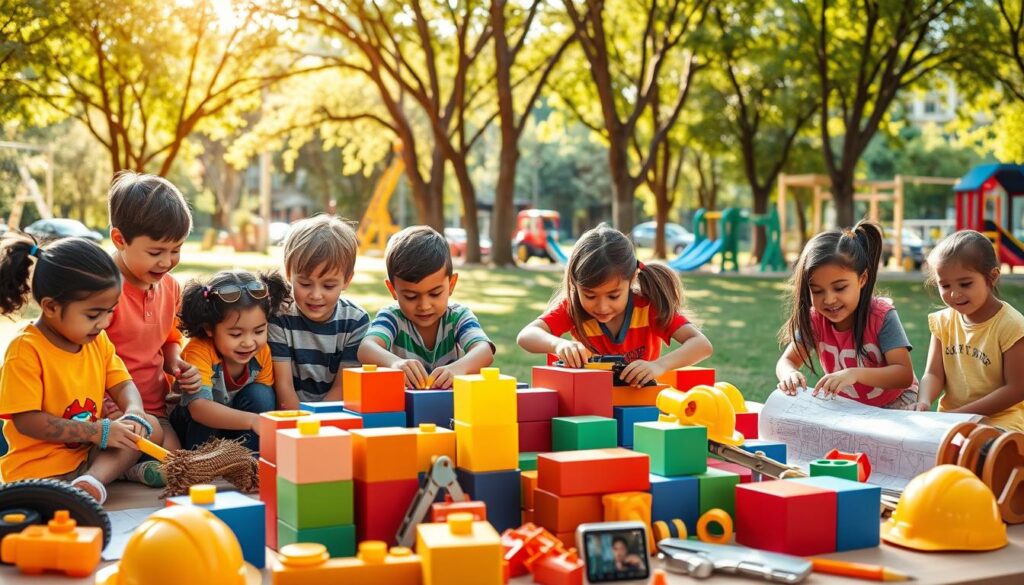
By understanding these different styles, you can make learning more effective. This way, kids are not only learning but also having fun with construction play.
Problem Solving Skills for Children Developed Through Construction Toys
Construction toys are great for helping kids solve problems. When kids play with these toys, they face challenges that make them think deeply. They have to plan, test, and change their plans to build something stable.
This process helps kids keep trying and think logically. These skills are key for doing well in school and life.
Playing with construction toys teaches kids by letting them try and fail. If a tower falls, they learn to figure out why and try again. This way, they learn to solve problems on their own.
- Building challenges encourage creativity and innovation.
- Children learn to collaborate and communicate effectively during group play.
- They develop resilience by facing and overcoming obstacles.
Here’s how construction toys can enhance problem solving skills:
| Skill Developed | Activity | Outcome |
|---|---|---|
| Planning | Designing a structure | Ability to visualize and strategize |
| Testing Ideas | Building and modifying | Understanding cause and effect |
| Adaptation | Revising plans after failure | Increased resilience and flexibility |
Encouraging your child to play with construction toys can really help them grow. The skills they learn will help them throughout their lives.
Benefits of Building Games for Motivating Engagement and Lifelong Learning
Building games are key in motivating kids and making learning fun. They grab young minds, making learning a joy. This is important for kids to love learning on their own.
When kids play with building games, they gain many benefits. These help them grow in their learning journey:
- Increased Curiosity: Building games spark curiosity. Kids want to learn more and explore new ideas.
- Active Participation: Kids become hands-on learners. They take charge of their learning.
- Problem-Solving Skills: These games boost creative thinking and problem-solving. These are key for lifelong learning.
- Social Interaction: Building together helps kids work as a team. They learn to communicate better with friends.
Building games turn learning into an adventure. Kids start to see school as fun. This helps them stay excited about learning as they get older.
In short, building games do more than just entertain. They motivate kids to dive into their studies. As they build, they learn skills that last a lifetime.
Conclusion
Building games are key for your child’s early growth. They help with thinking, moving, social skills, and feelings. Playing with blocks or LEGO boosts creativity and problem-solving.
These games are more than fun. They teach teamwork and talking, which are important social skills. Kids learn to handle feelings and become stronger, setting them up for success.
It’s important to support your child in building activities. They help with school and personal growth. Building games are a great way to make learning fun and help your child grow.