
I used to toss leftover pieces after a weekend project, until a visit to Doug Ashy Building Materials, Inc. at 4950 Johnston Street, Lafayette, LA opened my eyes.
I learned that many construction sites and supply yards have surplus supplies that can get a second life. That idea sparked a small experiment in my garage workshop.
My first project was a simple shelf made from scrap lumber and leftover fasteners. It was practical, low cost, and cut down on what would have been waste.
As I turn excess materials into useful items for my home, I feel more confident about the lifecycle of the things I buy. This piece introduces practical tips and stories to help you start your own creative projects.
Key Takeaways
- Surplus supplies from sites like Doug Ashy can be repurposed.
- Small projects reduce waste and add useful pieces to your home.
- Simple workshops reveal the potential in leftover materials.
- Learning by doing improves your understanding of construction and use.
- Start with one easy project to build skills and confidence.
Transforming Waste Through RECYCLED BUILDING ACTIVITIES
I began to see project leftovers as material waiting for a new purpose. That shift changed how I sort tools, boards, and small hardware after each job.
Diverting items from the landfill felt both responsible and creatively satisfying. I now scan every pile and ask if a piece can be patched, painted, or combined before it hits the dumpster.
My method is simple: identify potential, plan a small test project, and document the result. Keeping notes and photos helps me track what works and what to avoid next time.
- Look first: check for sound structure and usable fasteners.
- Think small: repurposing one item builds skills and confidence.
- Share results: photos and short notes can inspire neighbors and friends.
Working with leftovers forces better choices about future purchases. I now buy with reuse in mind and enjoy the creative problem solving that follows.
Assessing Your Leftover Construction Supplies
I start by clearing my garage area so I can see exactly what I have from past projects. This small step saves time and money when I plan a new task at home.
Inventorying Your Garage
I lay items out by type and note condition. I separate usable building materials from scraps that need repair.
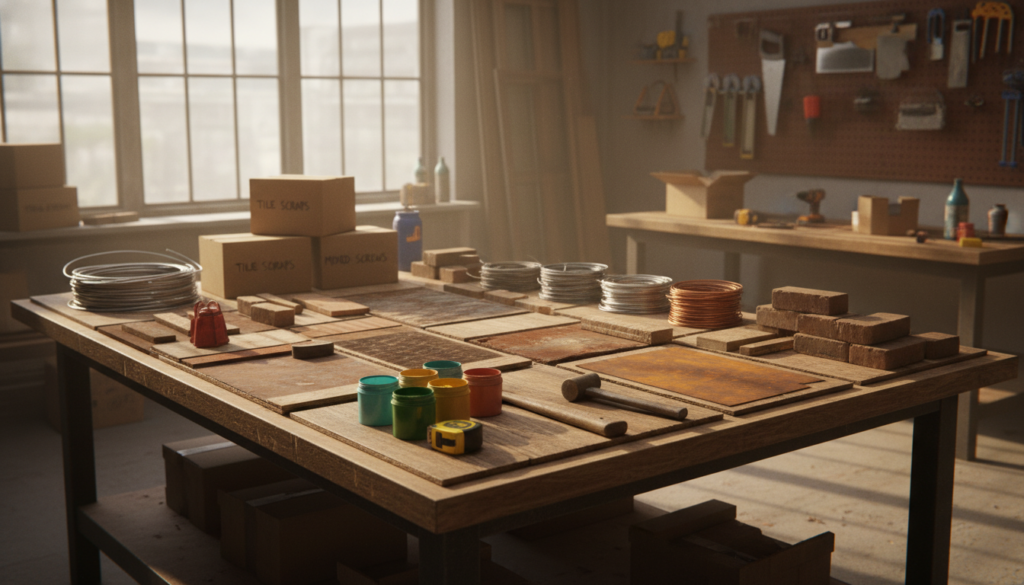
Next, I list what I still need for the upcoming project. That list helps me prioritize using what I already own before buying more supplies.
- I catalog lumber, hardware, tile, and leftover material by quantity.
- I mark items that are ready to use and those that require cleaning or fixing.
- I set aside pieces better suited for donation or recycling.
| Item | Condition | Recommended Action |
|---|---|---|
| Scrap lumber | Good | Keep for shelves or trim |
| Leftover tile | Mixed | Use for mosaic or donate |
| Hardware & fasteners | Good | Sort by size and store |
| Paint cans | Opened | Check usability, label clearly |
Keeping a clear inventory prevents impulse buys. When I need guidance on sourcing reclaimed supplies, I review resources like recycled building materials for ideas and local options.
Creative Projects Using Wood and Tile
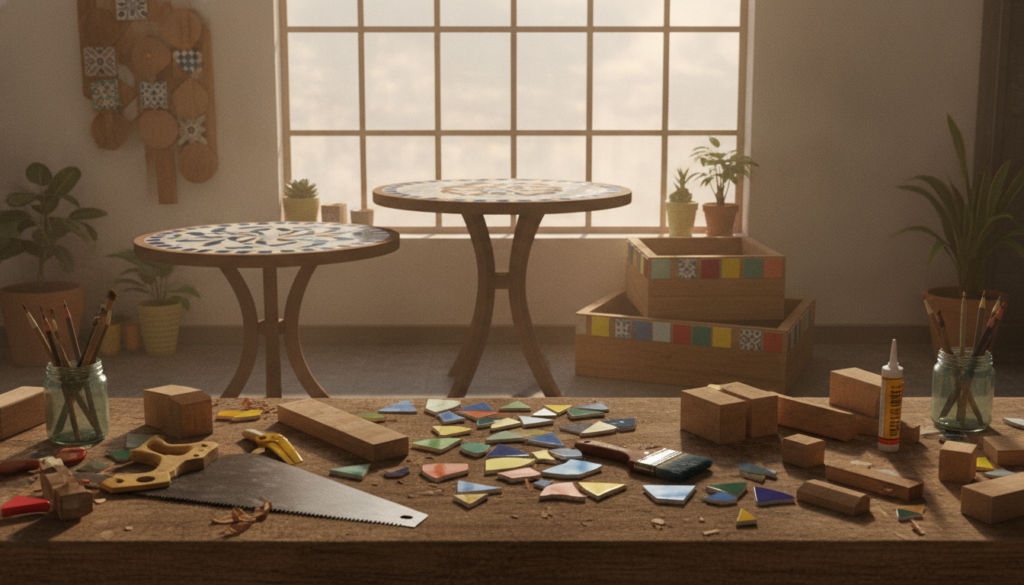
I often turn small salvaged planks and tiles into useful pieces for my yard. These simple projects help me cut waste and add personality to outdoor spaces.
Building Garden Trellises
I love using wood from sources like Crossroads Recycled Lumber in Northfork to build sturdy trellises for my vegetable patch.
- Why: trellises save space and support vines while making use of leftover lumber.
- Tip: reinforce joints with salvaged screws and short offcuts for strength.
Crafting Mosaic Tables
My favorite way to use leftover tile is to craft mosaic tables for patios and porches.
- Cut tiles into small pieces and arrange patterns on a reclaimed tabletop.
- Seal grout well for weather resistance; these tables make great focal points.
Designing Raised Planters
I often combine bricks and wood to make raised planters for herbs and flowers.
- Place small tile pieces at the bottom as a drainage layer to improve plant health.
- Raised beds let me repurpose odd bricks and scrap boards into durable garden structures.
Repurposing Metal and Miscellaneous Hardware
I rely on services like Aaron Metals in Hayward to haul away heavy scrap I can’t use in my own projects. Their free pick-up saves time and keeps my workspace safe.
I keep a small bin for metal pieces. That little habit pays off. One day a bracket, the next a perfect screw—these bits solve quick fixes.

Old light fixtures often resurface in my stash. A good clean and a fresh bulb give them a vintage look that fits porch or workshop lighting.
I also like combining metal pipes with wood scraps to make custom shelving. These shelves match odd spaces and hold tools and small bricks used as counterweights or decorative edging.
“Keeping a mix of fasteners and pipe fittings has saved me trips to the store more than once.”
- Tip: sort heavy metal for recycling and save smaller hardware for repairs.
- Use: bricks make sturdy bases for metal sculptures or garden borders.
- Plan: sketch a simple shelf layout before cutting pipes or wood.
Finding Local Partners for Material Reuse
Before hauling items off, I search local reuse channels that match my supplies. This habit saves trips and keeps good items from becoming waste.
I frequently consult the All For Reuse initiative to locate professionals focused on the reuse of commercial building materials.
Utilizing Online Marketplaces
I list excess supplies on resale sites and community boards. That helps me move items fast and connect with neighbors who have a need.
Tip: clear photos and honest descriptions speed up matches and cut down on wasted pickups.
Connecting with Deconstruction Networks
I reach out to local deconstruction groups when I need specific parts or larger salvage. The Build Reuse network, active since 1994, often points me to vetted contacts in my area.
Working with local partners keeps high-quality material circulating and out of landfills.
| Partner Type | Benefit | How I Use It |
|---|---|---|
| All For Reuse | Professional network for commercial reuse | Finds local buyers and trades for large quantities |
| Online marketplaces | Quick local sales and swaps | List excess tile, lumber, and hardware |
| Deconstruction groups | Salvaged items matched to needs | Source doors, trim, and durable fixtures |
| Local nonprofits | Donations for community projects | Donate usable supplies or request pickup help |
I also consult curated resources for local options, like building material reuse resources, when I need guidance on where to send surplus or find specific parts.
Donating Excess Supplies to Community Causes
After sorting a weekend’s leftovers, I realized many items could help local groups.
I often donate excess wood and bricks to Habitat for Humanity’s ReStore, knowing those supplies support home repairs and low-cost projects.
When I have high-quality pieces like old growth timber or vintage light fixtures, I take them to Building Resources in San Francisco so they go to the right hands.
Donating leftover building materials is a simple way to clear my workspace and help neighbors.
- I give lumber and tiles to ReStore for local repair projects.
- I donate sturdy bricks and leftover wood to groups that reuse them for homes.
- High-value items go to specialty centers that preserve vintage material.
| Item | Typical Condition | Best Donation Point |
|---|---|---|
| Wood (lumber, planks) | Good to fair | Habitat for Humanity ReStore |
| Bricks | Good | Local ReStore or community builds |
| Old growth timber & fixtures | High quality | Building Resources, San Francisco |
Conclusion
I look for one smart use for each scrap before deciding it is trash. That habit turned loose parts into real materials I could rely on for quick fixes.
Managing my home construction supplies changed how I plan projects. I cut waste, saved money, and improved how rooms feel.
Whether I make a small table or donate bricks, every choice keeps useful material out of the dumpster and supports a circular approach to resources.
I’m proud of what I’ve completed and eager to find new ways to use leftovers. Try one small project and see how much you can save and reuse.