
Introduction to Role-Play Emotional Development
Role-play emotional development is one of the most important parts of healthy childhood growth. Through pretend play, children learn how to understand emotions, express feelings, solve social problems, and build confidence naturally. Whether pretending to be a doctor, teacher, superhero, firefighter, or parent, children practice real-life emotional situations in a safe and creative environment.
Many parents see role-play as simple entertainment. In reality, it is a powerful learning experience that shapes emotional intelligence, communication skills, resilience, empathy, and social behavior. Imaginative play allows children to explore emotions freely while developing important life skills they will use throughout adulthood.
Childhood experts and developmental psychologists consistently emphasize the importance of pretend play because it supports both emotional and cognitive development simultaneously. Role-play emotional development is not just about creativity. It is emotional training for real life.
What Is Role-Play in Child Development?
Role-play, also called pretend play or dramatic play, happens when children imagine themselves in different situations or identities. A child may pretend to become:
- A doctor helping patients
- A parent caring for a baby
- A teacher leading a classroom
- A chef cooking meals
- A superhero saving people
- An astronaut exploring space
These imaginative experiences allow children to temporarily step outside their normal perspective and understand how other people think and feel.
According to Lev Vygotsky, pretend play helps children develop beyond their current emotional and social abilities. During role-play, children practice behaviors, emotions, and interactions they may not fully master yet in real life.
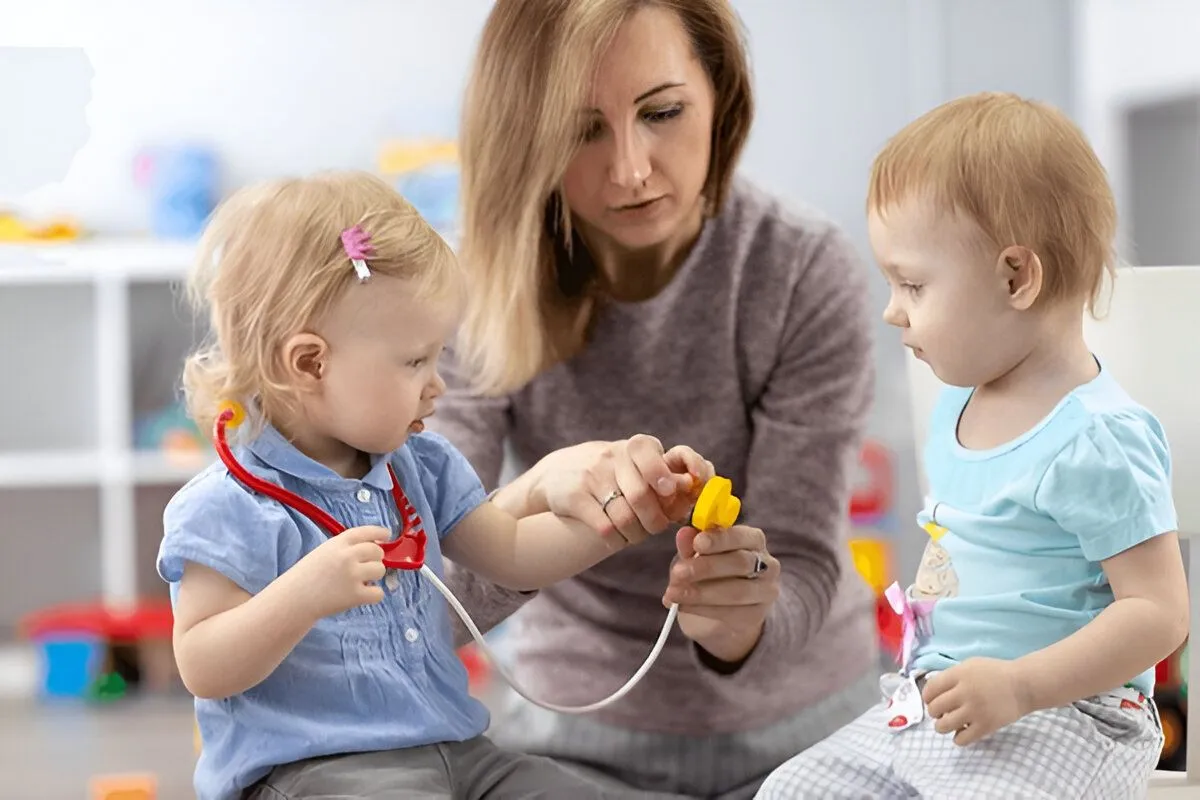
For example, a child who fears medical appointments may repeatedly play “doctor” to feel safer and more emotionally confident about the experience. This emotional rehearsal helps reduce anxiety and build resilience over time.
The Brain Science Behind Role-Play Emotional Development
Role-play emotional development strongly influences brain growth during childhood. When children engage in imaginative play, several brain regions become active at the same time.
The prefrontal cortex, responsible for decision-making, planning, and self-control, works together with the emotional centers of the brain. This combination strengthens emotional intelligence, problem-solving abilities, emotional flexibility, and social understanding.
Research in child development shows that pretend play helps children:
- Improve self-regulation
- Strengthen emotional awareness
- Increase creativity
- Develop empathy
- Build stronger communication skills
- Learn emotional problem-solving
Because role-play combines imagination, emotions, language, and social interaction, it becomes one of the most complete developmental activities in early childhood.
How Role-Play Emotional Development Improves Emotional Literacy
One of the biggest benefits of role-play emotional development is emotional literacy. Emotional literacy means understanding emotions, recognizing feelings, and expressing them appropriately.
During pretend play, children naturally experience emotions such as:
- Happiness
- Fear
- Frustration
- Excitement
- Anger
- Pride
- Sadness
- Disappointment
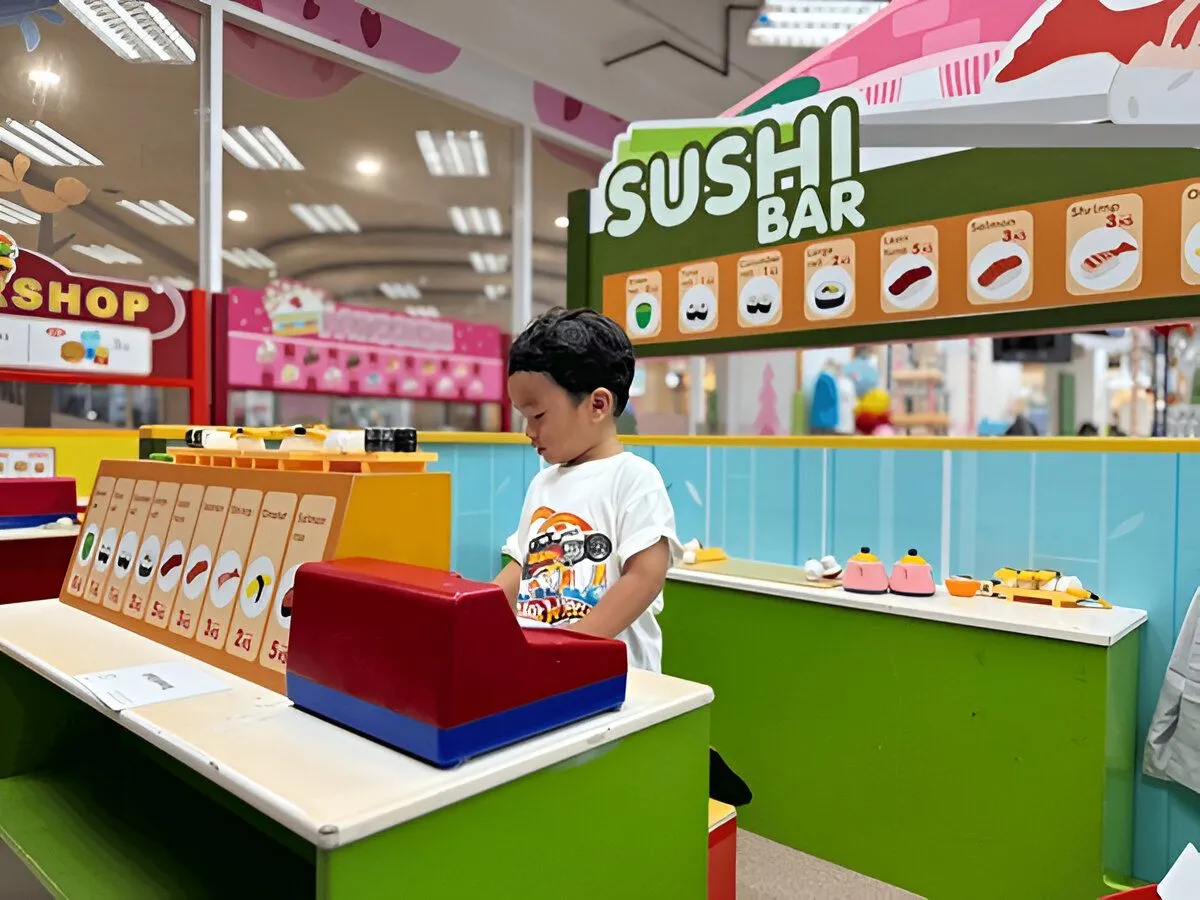
For example, a child playing “restaurant” may feel frustrated when the pretend meal goes wrong, excited when fixing the problem, and proud after serving imaginary customers successfully.
These emotional experiences happen naturally during imaginative play and help children build emotional awareness. Over time, children learn how to identify emotions more clearly in real-life situations.
Children with strong emotional literacy often communicate their feelings more effectively and develop healthier social relationships.
How Pretend Play Helps Children Regulate Emotions
Role-play emotional development also teaches emotional regulation. Young children experience strong emotions daily, but they are not born knowing how to manage them properly.
Pretend play allows children to practice:
- Staying calm under stress
- Managing frustration
- Solving conflicts
- Adapting to challenges
- Recovering from disappointment
Imagine a child pretending to be a superhero facing dangerous villains. During the game, they may experience fear, excitement, anger, or disappointment. To continue the story successfully, they must regulate those emotions and adapt emotionally.
This repeated emotional rehearsal strengthens coping skills and emotional control.
Research in developmental psychology consistently shows that children who regularly participate in imaginative play often manage stress and social challenges more effectively.
Role-Play Emotional Development and Empathy
Empathy is one of the most valuable emotional skills children can develop. Role-play emotional development naturally strengthens empathy because children constantly imagine life from another person’s perspective.
A child pretending to be:
- A doctor caring for patients
- A parent comforting a baby
- A teacher helping students
- A firefighter rescuing people
…must think about how others feel emotionally.
This perspective-taking teaches children that people have different emotions, fears, needs, and experiences. As children repeatedly practice understanding others during pretend play, empathy becomes stronger and more natural.
Research shows that children involved in cooperative dramatic play often develop healthier friendships, stronger communication skills, and better emotional understanding.
How Role-Play Builds Confidence and Emotional Resilience
Role-play emotional development also helps children build confidence and resilience. Through imaginative play, children safely experiment with emotional situations that may feel difficult in real life.
A shy child pretending to become a brave explorer temporarily experiences confidence and leadership. A child pretending to defeat monsters practices overcoming fear emotionally.
Pretend play allows children to rehearse courage, confidence, and problem-solving repeatedly.
Role-play also helps children process stressful situations such as:
- Starting school
- Visiting the doctor
- Moving to a new home
- Family changes
- Social anxiety
For example, children who feel nervous about school may repeatedly play “classroom” to gain emotional control over the experience. This safe emotional repetition builds resilience and reduces anxiety over time.
Social Skills Developed Through Role-Play Emotional Development
Role-play emotional development also improves social communication skills. Pretend play often requires teamwork, negotiation, cooperation, and listening.
Children learn how to:
- Share ideas
- Solve disagreements
- Compromise
- Express emotions clearly
- Understand social rules
- Cooperate with others
For instance, two children pretending to be astronauts may disagree about who becomes the captain of the spaceship. To continue playing together, they must communicate and negotiate successfully.
These emotional and social interactions help children build communication skills that remain valuable throughout life.
How Parents Can Encourage Role-Play Emotional Development
Parents and educators play an important role in encouraging healthy imaginative play.
Provide Open-Ended Toys
Simple materials often inspire the best creative experiences:
- Costumes
- Dolls
- Puppets
- Building blocks
- Toy kitchens
- Cardboard boxes
- Blankets
- Stuffed animals
Open-ended toys encourage children to create their own stories and emotional scenarios freely.
Allow Uninterrupted Playtime
Deep imaginative play requires time. Children need uninterrupted moments to fully explore emotions, stories, and social situations naturally.
Too many interruptions can reduce emotional depth and creativity during pretend play.
Observe Before Joining the Play
Adults should first observe children’s emotional themes before entering the game. Understanding what emotions children are exploring helps adults support play without controlling it.
Gentle questions such as:
- “How does your character feel?”
- “What happened to make them sad?”
- “What could help them feel better?”
…can deepen emotional understanding naturally.
Why Role-Play Emotional Development Matters More Than Ever
Modern childhood includes more screen time, busy schedules, and structured activities than ever before. However, children still need imaginative play for healthy emotional development.
Role-play helps children:
- Explore emotions safely
- Build empathy
- Strengthen confidence
- Improve communication
- Learn emotional resilience
- Develop creativity
- Understand relationships
Digital entertainment can support creativity in some situations, but it should never fully replace real imaginative play experiences.
Children still need opportunities to invent stories, solve emotional problems, and explore social situations naturally through pretend playnavigate it.
Conclusion
Role-play emotional development is far more than childhood entertainment. It is one of the most powerful tools for helping children build emotional intelligence, confidence, empathy, resilience, and communication skills.
A child comforting a doll practices compassion. Pretending to defeat monsters helps children build courage and emotional resilience. Meanwhile, negotiating roles during imaginative play strengthens communication and problem-solving skills.
These emotional lessons often remain with children throughout adulthood.
When parents and educators encourage imaginative play, they are helping children build the emotional foundation needed for healthy relationships, emotional wellbeing, and lifelong success.
Pretend play may look simple from the outside, but inside every imaginary adventure, children are learning how to understand the real world emotionally.
For more child development insights, explore our articles about imaginative play, cognitive development activities, and physical play benefits for children. You can also learn more about childhood emotional development through Harvard Center on the Developing Child and American Academy of Pediatrics.
FAQ About Role-Play Emotional Development
Why is role-play important for emotional development?
Role-play helps children understand emotions, develop empathy, improve communication skills, and build emotional confidence through imaginative situations.
At what age does pretend play begin?
Pretend play usually begins around age two and becomes more advanced between ages four and six.
How does role-play build empathy?
Children imagine how other people feel when pretending to be parents, teachers, doctors, or community helpers, which strengthens emotional understanding.
Can role-play reduce anxiety in children?
Yes. Many children process fears and stressful experiences through pretend play because it gives them emotional control in a safe environment.
What toys encourage role-play emotional development?
Costumes, dolls, toy kitchens, puppets, cardboard boxes, blankets, and open-ended toys are excellent for imaginative play.
Is role-play still important for older children?
Absolutely. Older children continue benefiting from storytelling games, theater activities, fantasy adventures, and cooperative role-playing experiences.