
Have you ever wondered if the secret to unlocking your child’s genius lies right at their fingertips? Many parents overlook the simple power of tactile exploration in daily routines. By engaging the senses, you provide a vital foundation for cognitive growth.
We explore how sensory play activities to stimulate imagination and creativity can transform your home into a hub of discovery. These methods focus on auditory, visual, and physical experiences that build neural pathways. Embracing these moments helps children process the world with confidence and joy.
Our guide offers a practical roadmap for parents seeking meaningful ways to support developmental milestones. Let us dive into how these fun exercises foster a lifelong love for learning.
Key Takeaways
- Tactile engagement builds essential brain connections in young children.
- Simple household items often provide the best tools for exploration.
- Visual and auditory inputs are just as important as touch.
- Consistent practice helps children develop stronger problem-solving skills.
- Fun, hands-on learning creates a positive association with education.
Understanding Sensory Play and Its Benefits
Understanding the mechanics of sensory play reveals why it is so essential for early childhood development. Research shows that 80% of an adult brain is formed in the first three years of life. During this critical window, neural connections are at their most active state.
By providing sensory play for kids, parents can support the essential developmental milestones that form the foundation for lifelong learning. These activities act as building blocks for a child’s future success.
What is Sensory Play?
At its core, sensory play is defined as any activity that stimulates the senses. This includes sight, smell, hearing, taste, and touch. It is a hands-on approach that allows children to explore the world through direct interaction.
Whether it is squishing playdough or listening to the sound of crinkling paper, these experiences are vital. Sensory play for early childhood is not just about entertainment; it is about gathering data that the brain uses to understand the environment.
Key Benefits for Children
The sensory play benefits extend far beyond simple amusement. Engaging in these activities helps children develop better emotional regulation, which is crucial for managing big feelings. It also fosters significant cognitive growth as children learn to categorize and process new information.
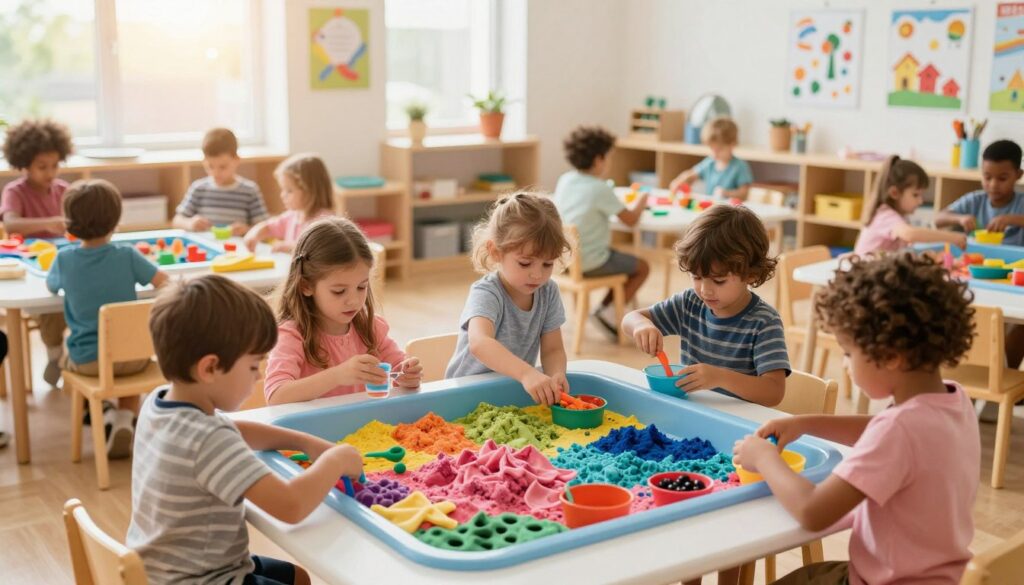
Furthermore, these activities often occur in group settings, which promotes social skill development. Children learn to share materials, communicate their discoveries, and collaborate with peers. This social interaction is a key component of healthy development.
How Sensory Play Stimulates Creativity
When children engage their senses, they are actively building new neural pathways. This process is essential for sparking imagination and creative problem-solving. By offering sensory play for kids, you provide a safe space for them to experiment with different textures and materials.
The sensory play benefits are clear when you watch a child transform a simple bin of rice into a miniature world. This type of open-ended exploration encourages them to think outside the box. It turns everyday objects into tools for innovation and discovery.
Materials for Sensory Play Activities
Creating a rich environment for your child begins with selecting the right sensory play materials. You do not need expensive equipment or specialized gear to foster deep engagement. In fact, many of the most effective tools are likely already sitting in your kitchen or backyard.
Common Household Items
Your kitchen is a treasure trove for sensory play at home. Simple items like stainless steel bowls, wooden spoons, and measuring cups provide endless opportunities for pouring, scooping, and mixing. These everyday objects allow children to experiment with weight, volume, and sound without the need for complex toys.
Consider adding plastic funnels, colanders, or even clean sponges to your collection. These items encourage children to explore cause and effect as they manipulate different textures. By repurposing common household goods, you create a sustainable and budget-friendly way to support your child’s development.
Nature-Inspired Materials
Nature offers some of the most valuable resources for tactile exploration. Items like smooth river stones, pinecones, dried leaves, and sticks are inherently open-ended. Because these materials do not have a specific intended use, they naturally encourage children to think critically and creatively.
When children interact with natural elements, they connect with the world around them in a meaningful way. You might gather a basket of seashells or sand to bring the outdoors inside. This type of exploration helps build a foundation for scientific inquiry and imaginative storytelling.
Store-Bought Sensory Kits
While DIY options are fantastic, store-bought sensory kits can be a helpful addition to your collection. These kits often come with pre-dyed rice, themed figurines, and specialized tools that save you time on preparation. They are particularly useful when you want to introduce a specific theme or a new texture quickly.
Many parents find that a mix of homemade and purchased items works best for sensory play at home. Use kits to supplement your existing stash of sensory play materials during busy weeks. Ultimately, the goal is to provide a variety of textures and experiences that keep your child curious and engaged.
Sensory Play Ideas for Indoor Fun
Rainy days provide the perfect backdrop for exploring new textures and scientific concepts at home. Indoor environments offer a controlled space where you can experiment with messy play without worrying about the weather. These sensory play ideas are designed to keep little ones engaged for hours while fostering their natural curiosity.
DIY Sensory Bins and Tables
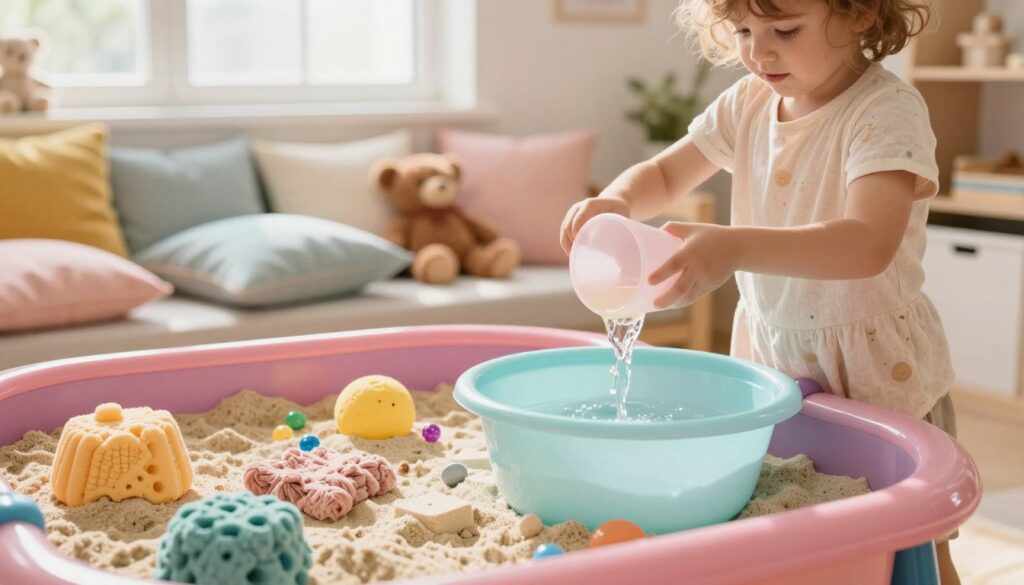
Creating a sensory bin is one of the most effective ways to provide hands-on learning. For younger children, apple cloud dough is a fantastic, taste-safe option that helps develop fine-motor skills. This soft, moldable material is perfect for sensory play for toddlers who are still exploring the world by putting objects in their mouths.
You can fill plastic bins with dried rice, beans, or water beads to create different tactile experiences. Adding small scoops, funnels, and containers encourages children to practice pouring and transferring. These simple tools turn a basic bin into a complex station for discovery.
Creative Art Projects
Art projects allow children to express their imagination through touch and sight. Finger painting with homemade, non-toxic paints is a classic activity that invites children to feel the texture of the medium. You can also introduce textured collages using items like sandpaper, cotton balls, and fabric scraps.
These activities help children understand how different materials feel and react when combined. By focusing on the process rather than the final product, you encourage creative confidence. This approach is essential for developing a love for artistic exploration.
Science Experiments
Simple science experiments can turn a quiet afternoon into a productive learning session. Mixing baking soda and vinegar is a timeless way to observe chemical reactions in a safe, controlled manner. You can add food coloring to the vinegar to make the bubbling effect even more visually stimulating.
Another great experiment involves creating “oobleck” by mixing cornstarch and water. This non-Newtonian fluid changes from a solid to a liquid when touched, providing a fascinating lesson in physics. These experiments are perfect for sensory play for toddlers and older children alike.
| Activity Type | Primary Sense | Difficulty Level | Best For |
|---|---|---|---|
| Apple Cloud Dough | Touch | Easy | Toddlers |
| Textured Collage | Sight/Touch | Medium | Preschoolers |
| Baking Soda Volcano | Sight/Sound | Medium | All Ages |
| Cornstarch Oobleck | Touch/Sight | Easy | Toddlers |
Outdoor Sensory Play Activities
Outdoor environments offer unique opportunities for sensory development that indoor spaces simply cannot match. By stepping into the fresh air, children encounter a vast array of textures, scents, and sounds that stimulate their curiosity. These sensory play ideas help children connect deeply with the world around them while building essential physical and cognitive skills.
Nature Walks and Scavenger Hunts
Nature walks are excellent for sharpening a child’s observation skills. When you turn a simple walk into a scavenger hunt, you encourage children to look closely at the details of their environment. They might search for smooth stones, rough tree bark, or vibrant green leaves, which makes these sensory play ideas both educational and fun.
Sand and Water Play Stations
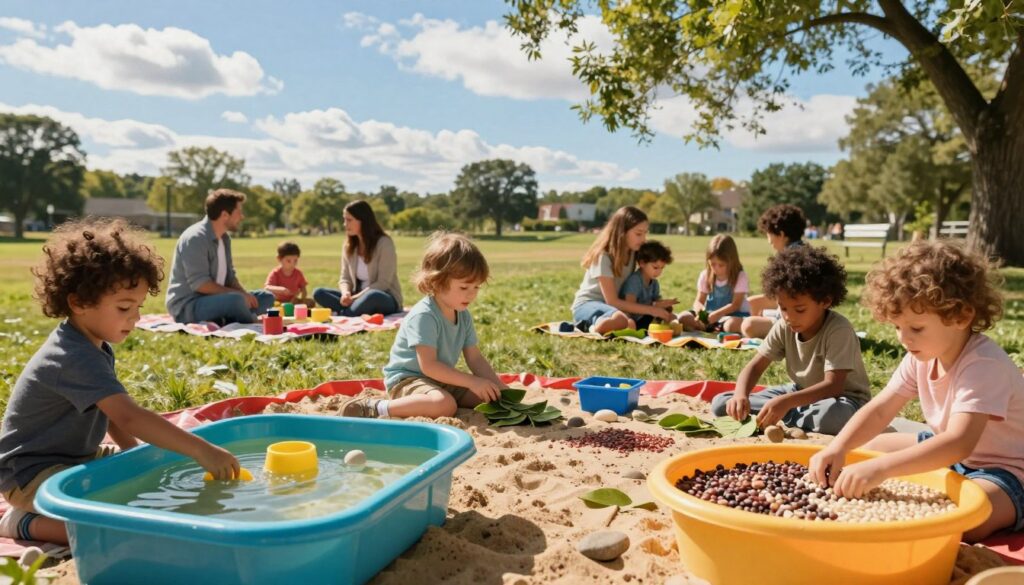
Setting up dedicated sand and water stations allows children to explore physics and chemistry in a tactile way. These stations foster cooperative play as children work together to build structures or move water through channels. This type of engagement is vital for developing fine motor coordination and social communication skills.
Gardening and Planting
Gardening serves as an immersive experience that teaches children about the cycles of the natural world. Digging in the soil, feeling the texture of seeds, and watering plants provide a rich sensory experience. These sensory play ideas help children develop patience and a sense of responsibility as they watch their hard work grow into something beautiful.
| Activity Type | Primary Sensory Focus | Key Skill Developed |
|---|---|---|
| Nature Scavenger Hunt | Visual and Tactile | Observation |
| Sand and Water Play | Tactile and Proprioceptive | Coordination |
| Gardening | Olfactory and Tactile | Responsibility |
The Role of Texture in Sensory Play
When children engage with various textures, they begin to categorize the physical world in meaningful ways. Texture acts as a primary driver of exploration, helping young minds understand the properties of their environment. By utilizing diverse sensory play materials, children can develop a deeper connection to the objects they encounter every day.
Textured Materials to Explore
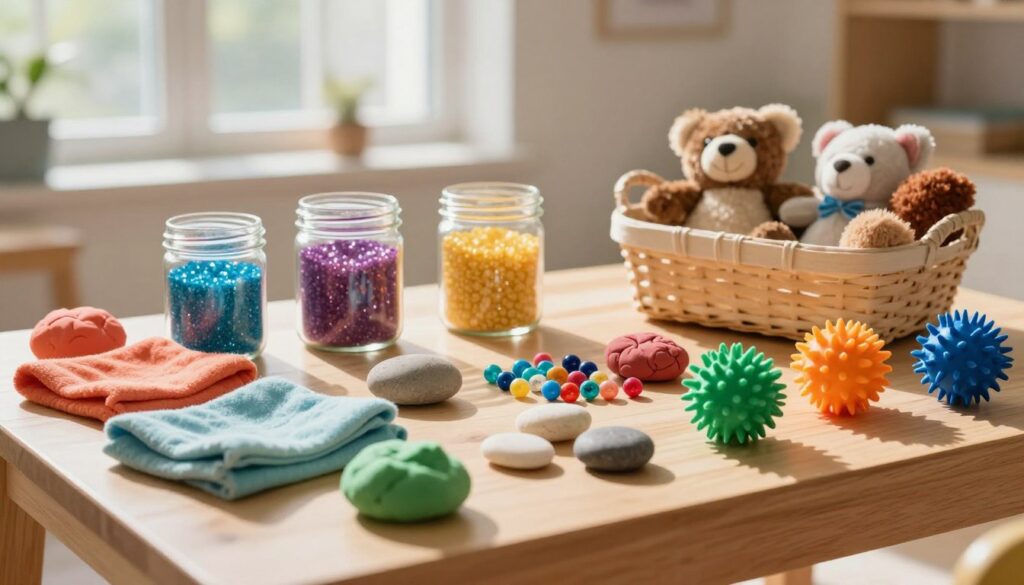
A wide variety of items can be used to stimulate the sense of touch. You can start by gathering items from around your home or the local park to create a rich tactile experience. Consider incorporating the following items into your collection:
- Soft fabrics like velvet, silk, or faux fur.
- Gritty substances such as sand, dried rice, or beans.
- Cool, smooth stones or polished glass gems.
- Natural elements like rough tree bark, pinecones, or damp moss.
How Textures Influence Imagination
Natural materials provide the perfect opportunity for children to observe what they are feeling. As they touch these items, encourage them to use descriptive sensation words like rough, smooth, cold, and damp. This practice helps children build their vocabulary and improves their ability to communicate their experiences clearly.
When a child describes a stone as “cold and smooth,” they are doing more than just identifying a feeling. They are actively engaging their imagination to link physical sensations with abstract concepts. Using high-quality sensory play materials fosters this creative growth during daily activities.
Creating a Texture Exploration Station
Setting up a dedicated space for tactile discovery keeps your supplies organized and accessible. You might use a low shelf or a series of labeled bins to house your collection. This allows children to choose their own items and explore at their own pace.
| Material Type | Texture Quality | Sensory Benefit |
|---|---|---|
| Velvet Fabric | Soft and Plush | Calming and soothing |
| River Stones | Cool and Smooth | Temperature awareness |
| Dried Beans | Hard and Gritty | Fine motor stimulation |
| Damp Moss | Soft and Moist | Nature connection |
Incorporating Movement into Sensory Play
Sensory play is often viewed as a quiet, seated activity, but it truly thrives when children get their bodies moving. By integrating physical activity, you provide essential input for the vestibular and proprioceptive systems. This approach is a cornerstone of sensory play for early childhood, helping children develop better balance and coordination.
Dance and Movement Activities
Dance is a wonderful way for children to express themselves while regulating their energy levels. When children move to music, they naturally improve their spatial awareness and rhythm. You can introduce fun games like “hop like a frog” or “crawl like a caterpillar” to encourage gross motor development in a playful, engaging way.
Yoga for Sensory Awareness
Yoga offers a calm yet powerful method for children to connect with their physical selves. By holding specific poses, toddlers learn to identify different muscle groups and practice deep breathing. This practice is highly effective for sensory play for toddlers, as it helps them find a sense of inner balance and focus during busy days.
Obstacle Courses with Sensory Elements
Designing an obstacle course is a fantastic way to challenge a child’s motor skills while keeping them entertained. You can incorporate various textures, such as placing a soft rug to crawl over or a bumpy mat to step on. These added elements turn a simple physical challenge into a rich, multi-sensory experience that builds confidence and strength.
| Activity Type | Primary Benefit | Sensory Focus |
|---|---|---|
| Animal Movement Games | Gross Motor Skills | Proprioception |
| Guided Yoga | Body Awareness | Balance |
| Sensory Obstacle Course | Coordination | Tactile & Vestibular |
Using Sensory Play for Learning
Intentional sensory play development transforms simple playtime into a rich educational experience. By engaging the senses, children build a solid foundation for understanding abstract concepts in math and science.
Educational Sensory Play Ideas
You can easily turn household items into powerful learning tools. Simple sensory play ideas like sorting colored buttons or counting dried beans help children practice early math skills.
Pattern recognition is another skill that thrives during these activities. By arranging items in specific sequences, children learn to identify logical structures, which is a key component of early literacy and numeracy.
Linking Sensory Play to Curriculum
Educators often use sensory stations to meet specific classroom goals. When children manipulate materials, they are not just playing; they are actively engaging with curriculum standards related to classification and observation.
“Play is the highest form of research.”
This approach allows children to explore complex ideas at their own pace. By connecting these activities to learning objectives, you ensure that every moment of exploration serves a meaningful purpose in their growth.
Promoting STEM Through Sensory Exploration
Manipulating natural, unstructured items introduces children to scientific concepts like cause-and-effect, volume, and weight. For instance, pouring water between containers of different sizes teaches them about capacity in a tangible way.
These sensory play ideas provide the groundwork for future scientific reasoning. As children experiment with how objects interact, they develop the critical thinking skills necessary for advanced STEM studies.
Activity Type Primary Skill STEM Concept Sorting Grains Classification Data Analysis Water Pouring Measurement Volume Balancing Rocks Comparison Weight/Gravity Consistent sensory play development helps children feel confident when approaching new challenges. By fostering a love for discovery, you prepare them for a lifetime of academic success.
Tips for Creating an Engaging Play Environment
A well-planned space is the foundation for successful sensory play for kids in any household. By curating a specific area, you help children focus their attention and dive deeper into their creative explorations.
Setting Up a Sensory-Friendly Space
You do not need a massive playroom to foster meaningful experiences. Start by choosing a low-traffic corner where your child feels comfortable and free to explore without constant interruption.
Keep the area clutter-free to ensure that the focus remains on the materials at hand. Using simple storage bins or trays helps define the boundaries of the activity, making cleanup much faster for parents.
Combining Different Senses
The most effective sensory play at home often involves layering different stimuli to create a rich, immersive experience. You might pair the sound of dry rice hitting a metal bowl with the cool, smooth texture of plastic scoops.
However, it is vital to avoid overstimulation. If a child seems overwhelmed, simplify the setup by removing one sensory element, such as a loud sound or a strong scent, to restore balance.
“Play is the highest form of research.”
Safety Considerations
Safety is the most important aspect of any play session. Always inspect your materials for potential choking hazards, especially when working with small items like beads or dried beans.
Utilizing common household items like buckets, spoons, and cups is an environmentally responsible and accessible way to engage in discovery. Ensure that all materials are non-toxic and age-appropriate for your child.
By maintaining a secure environment, you allow your little ones to explore with confidence. Consistent supervision remains the best way to ensure that sensory play at home stays both fun and safe for everyone involved.
Encouraging Imaginative Play Through Sensory Activities
The true magic of childhood lies in the ability to transform simple objects into vast, new worlds. By focusing on sensory play activities to stimulate imagination and creativity, you provide the tools necessary for children to build their own unique narratives.
Storytelling with Sensory Elements
Small world play invites children to invent characters and complex plots using tactile props. A bin filled with kinetic sand or water beads becomes a stage for epic adventures. This hands-on approach helps children process their thoughts and express emotions through physical interaction.
Themed Sensory Play Sessions
Organizing sessions around specific themes helps guide sensory play development while leaving room for individual expression. You might choose a space exploration theme or a deep-sea adventure to spark curiosity. These structured environments give children a starting point to launch their own creative ideas.
Fostering Collaborative Play Techniques
Shared creative experiences teach children how to communicate and cooperate with their peers. Working together on a large sensory mural or a group obstacle course builds empathy and social awareness. These interactions turn individual exploration into a collective journey of discovery.
Start your next play session today to see how these simple strategies unlock new potential. Your involvement creates a supportive space where every child can thrive and grow through the power of their own imagination.